Insurance Documentation FAQs
Insurance Documentation FAQs for Florida property owners. Clear answers about safety, emergency steps, cleanup, drying, documentation and restoration planning.
Coverage entries describe the service-area directory and do not represent a physical office at every listed ZIP.
Insurance Documentation FAQs
How to document property damage for insurance claims — what to capture, when, how to organize it, and the mistakes that cost owners money.
What should I document for an insurance claim?
The short answer: The source, the damage at its worst, every affected area (wide shots + close-ups), a narrated video walkthrough, moisture or damage measurements where relevant, a written timeline of discovery and actions, an inventory of damaged belongings, and every receipt from day one. Organize by area and date.
The principle: the adjuster wasn't there, so your documentation is the event for claim purposes. The most valuable evidence is the ugly stuff — active water, worst-condition rooms, failed parts — captured before mitigation changes the scene. After that, keep the file current: every contractor visit, every insurer call (followed by confirming email), every expense. Our water documentation guide and storm documentation guide have complete checklists.
Should I wait for the adjuster before cleaning up?
The short answer: No. You have a duty to mitigate further damage, and waiting can harm both the property and the claim. Document thoroughly first, then begin emergency mitigation. Insurers expect this sequence — they don't expect you to live in standing water awaiting their schedule.
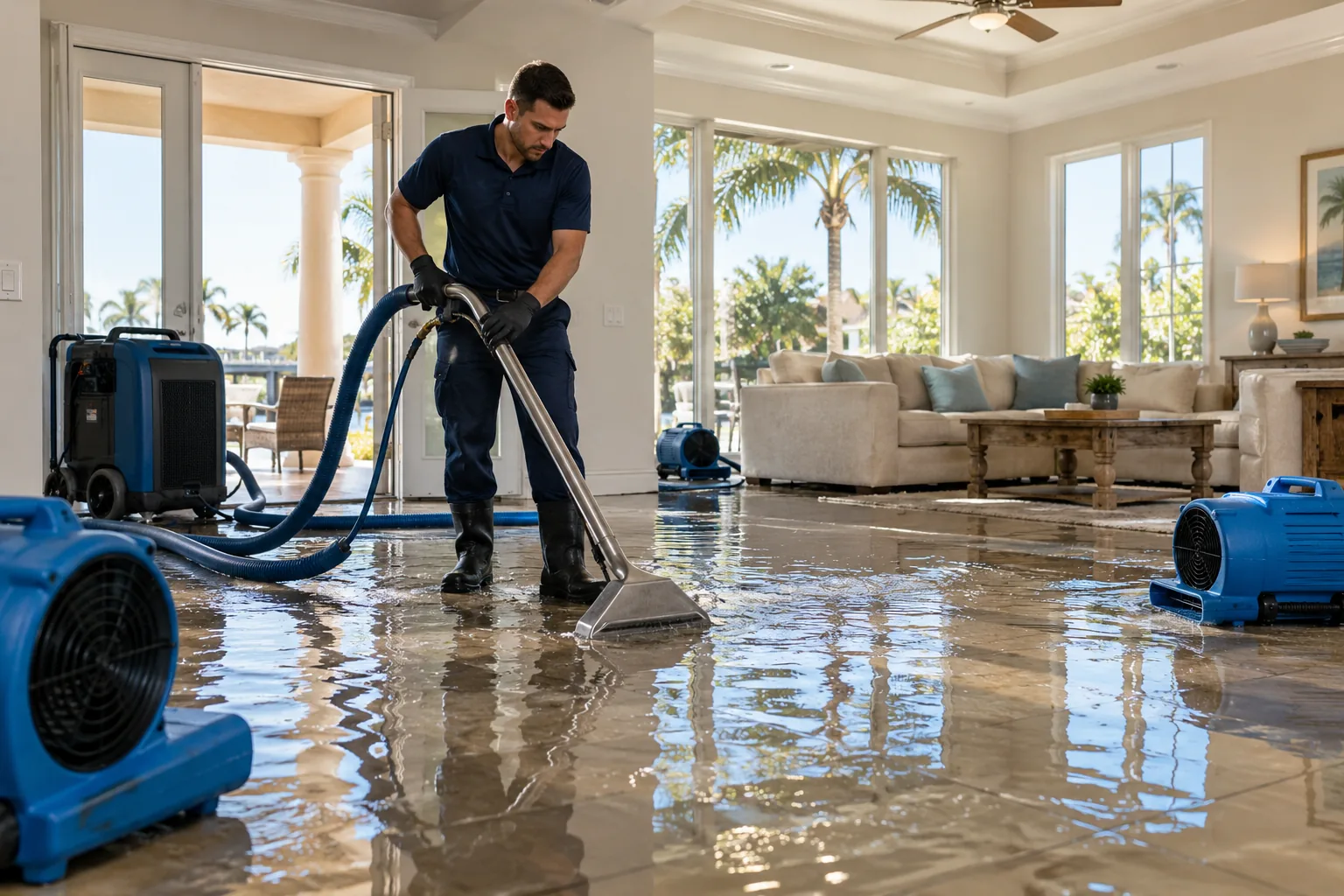
The balance is "mitigate and document": photos and video first, then water extraction, tarping, and drying. Professional insurance documentation services exist for exactly this window — capturing the evidence-grade record (moisture readings, scoped measurements, structured reports) while mitigation proceeds. If the adjuster can't visit for days, your documentation stands in for the inspection.
What are the most common claim documentation mistakes?
The short answer: Cleaning before photographing, discarding evidence (failed parts, damaged items), verbal-only agreements, no moisture or measurement records, missing the "before" condition, and disorganized files that make the adjuster's job harder. Each gives the insurer room to reduce the claim.
The fix for all of these is the claim file habit: one place (physical or digital) where everything goes from day one. Photograph first, keep failed parts bagged and tagged, confirm calls in writing, ask contractors for their logs and reports, and pull any pre-loss photos of the property (listings, personal photos). Organized claimants get better outcomes — not because the system favors them, but because their evidence is undeniable. For cost context on what's being claimed, see our Florida cost guide.
Building a claim file that gets paid
Adjusters approve claims they can verify. Your job as the policyholder is to make verification easy by building a complete, organized file from the first hour. Think of it as telling the story of your loss in a way that leaves no gaps.
- Photo and video evidence. Wide shots showing the extent, close-ups of specific damage, and photos of the source (burst pipe, roof breach). Include timestamps. Photograph serial numbers and model plates on damaged appliances and systems.
- A written timeline. When you discovered the damage, what you did, who you called, and when. Contemporaneous notes carry weight.
- Every receipt. Emergency services, tarping, water extraction, hotel stays if displaced, meals if your kitchen is unusable. Your policy's additional living expense coverage reimburses these — but only with receipts.
- Professional documentation. Moisture readings, written scopes of work, and completion reports from your restoration contractor corroborate your account with third-party data.
- Pre-loss evidence. Older photos showing the property's condition before the event counter any argument that damage was pre-existing.
Common documentation mistakes that reduce payouts
The most expensive mistake is discarding damaged items before they're documented. Once it's gone, you can't prove it existed or how bad it was — photograph everything before disposal, and keep samples of materials like flooring or drywall where practical. Second: failing to mitigate. Your policy requires you to prevent further damage, and adjusters can reduce payouts if you let a bad situation sit. Third: undocumented verbal agreements. If your adjuster approves something by phone, follow up with an email summarizing what was agreed. Fourth: signing over your claim rights (assignment of benefits) without understanding what you're giving up — Florida reformed these rules, but the paperwork still deserves careful reading. Finally, delay: most policies require prompt notice, and late reporting gives carriers room to question the claim.
Related reading: water damage insurance documentation and storm damage documentation.
What should I photograph after property damage?
Capture wide room views, close-up material damage, affected contents and the apparent source when safe.
Does documentation guarantee an insurance payment?
No. Coverage depends on the policy, cause, exclusions, deductibles and claim circumstances.
What records should I keep?
Keep photos, estimates, invoices, moisture records where applicable and communications related to the loss.
How quickly must I notify my insurer in Florida?
Policies require "prompt" notice — report within days, not weeks. Late reporting is one of the most common claim complications. File the initial notice fast; you can supplement documentation as it's gathered.
What is a proof of loss?
A formal sworn statement of your claimed amount, which insurers can require — in Florida, typically within 60 days of request. Your claim file (photos, inventory, receipts, estimates) becomes its basis. Treat the deadline as hard; missing it can jeopardize the claim.
Can I choose my own contractor?
Yes — insurers may suggest preferred vendors, but you're not obligated to use them. Choose on competence and documentation quality. Be cautious about signing assignment of benefits; understand what it transfers before signing anything under pressure.
What if the adjuster's estimate seems too low?
Get an independent detailed estimate, compare line by line, and present discrepancies with your documentation. You can invoke the policy's appraisal clause. Detailed evidence — photos, moisture logs, measurements — is what gives you leverage in these discussions.
Related guidance
Use the broader resource hub, service pages and local city pages to move from a question to a location-specific action plan.
Need to talk through a property loss?
Give the city, ZIP code and damage type when you call. For immediate life-safety emergencies, contact 911 first.