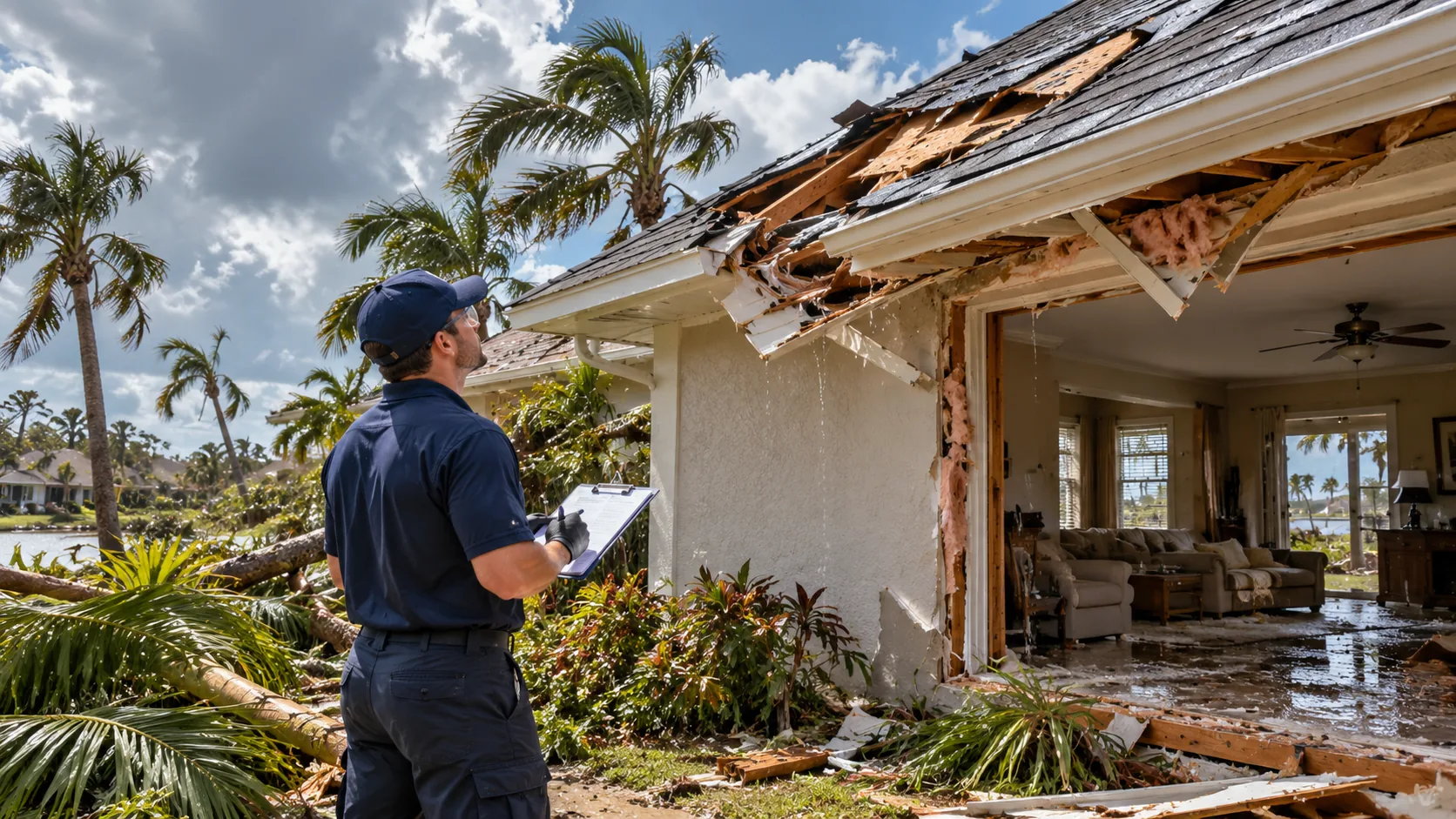
After a Florida storm, your property tells a story — and your insurance claim depends on how well you record it. But there's a right way and a dangerous way to document. This guide shows you how to capture everything your claim needs without putting yourself at risk, and in the right order.
How do I document storm damage safely?
The short answer: From the ground, with a phone camera: walk the perimeter photographing the roofline, siding, windows, and yard debris; photograph interiors showing water intrusion; shoot a narrated video; and stay off the roof, out of flooded areas, and away from downed power lines and leaning trees. No photo is worth an injury.
The post-storm injury statistics are sobering — falls from roofs, chainsaw accidents, and electrocutions spike after every major storm. Your job is documentation, not heroics. A zoomed-in phone photo from the ground shows shingle damage adequately. Drone footage is excellent if you own one and can fly legally and safely; otherwise, leave elevated inspection to professionals with proper equipment. If a structure looks unstable (shifted, partially collapsed), don't enter it for interior photos — document from the doorway or wait for professional assessment.
The safe documentation sequence
- Exterior walk-around: all four sides, roofline from the ground, close-ups of visible damage (missing shingles, damaged flashing, broken windows, fence/debris).
- Ground evidence: fallen shingles, branches, hail stones next to a coin for scale — these corroborate the storm's intensity.
- Interior: every room with water intrusion, ceiling stains, wet flooring — wide shots plus close-ups.
- Video walkthrough: narrate what you're seeing, with dates and times. "Saturday 8 AM, day after the storm, master bedroom ceiling actively dripping."
- Details: photograph the date/time display on your phone at the start for timestamp evidence.
What does an insurance adjuster want to see for storm damage?
The short answer: Proof of the storm's impact on your property: before-and-after condition, the specific damage points, the storm's date and severity, temporary repairs you made (and their cost), and a clear link between the storm event and each item of damage claimed.
Adjusters handle storm claims in volume after major events, which means clear, organized documentation gets better outcomes. Organize photos by area (roof, north elevation, interior — master bedroom, etc.), keep a written log of what you found and when, and save receipts for every emergency expense: tarping, board-up, water extraction, hotel stays. If you have pre-storm photos of your property (real estate photos, insurance renewal photos), pull them now — "before" evidence is powerful. Our water damage documentation guide covers the same principles in more depth.
Should I make temporary repairs before the adjuster visits?
The short answer: Yes — you have a duty to prevent further damage, and insurers expect it. Tarp damaged roofs, board broken windows, and extract standing water. Photograph everything before the temporary repair, keep receipts, and don't begin permanent repairs until the adjuster has documented the damage.
This is the line that matters: temporary/emergency mitigation = expected and reimbursable; permanent reconstruction before inspection = risky. A roof tarp is mitigation. A new roof installed before the adjuster visits is a problem. When in doubt, photograph thoroughly, do the minimum to prevent further damage, and communicate with your insurer in writing about what you're doing and why. Save our roof tarping guide for the specifics.
What storm details strengthen my claim?
The short answer: The storm's official identity (name/number, date), measured intensity in your area (wind speeds, rainfall from National Weather Service reports), and any local emergency declarations. This third-party evidence corroborates that a qualifying event occurred at your location on that date.
After major storms, the National Weather Service publishes storm reports with wind and rainfall data by area — save the relevant pages. Local news coverage of damage in your neighborhood helps too. This matters most for wind-vs-water disputes (see below) and for establishing that damage is storm-related rather than pre-existing or maintenance-related. A file with your photos plus the NWS report for your ZIP code is a well-built claim foundation.
How do wind vs. water disputes work in Florida storm claims?
The short answer: Standard homeowners policies cover wind damage but exclude flood — so when a hurricane brings both, insurers and owners often dispute which caused specific damage. Your documentation should separately evidence wind effects (roof damage, broken windows, fallen trees) and water effects (water lines, intrusion points), because they may fall under different coverages.
This is Florida's signature claim battleground. A roof torn by wind (covered) that then admits rain (covered as ensuing damage) is a different claim than storm surge flooding (flood policy only). Photograph the openings — the missing shingles, the breached window — as well as the water inside, because the opening is what connects the water damage to the wind event. If you carry both homeowners and flood insurance, file with both promptly and let the evidence sort the allocation. Our Florida cost guide explains how these coverages interact.
Dealing with this right now?
You don't have to figure out the next step alone. Call and describe what you see — where the damage is, how long it's been there, and whether it's still spreading — and you'll get a straight answer about what to do next.
Call (833) 606-6010 Request help online
emergency line. If there's an active life-safety danger, call 911 first. Email: help@skyfoldrestorationfl.com
Frequently asked questions
How soon after a storm should I document damage?
As soon as it's safe — ideally within hours. Conditions change: water dries, debris gets cleared, temporary repairs cover damage. The "at its worst" record is the most valuable evidence you'll ever have for the claim.
What if I already cleaned up before photographing?
Document what's left as thoroughly as possible, write down exactly what you did and when, and gather any corroborating evidence (neighbor photos, news reports, contractor observations). It's weaker than before-cleanup documentation, but it's far better than nothing.
Should I get on the roof to photograph damage?
No. Post-storm roofs are dangerous — wet surfaces, hidden structural damage, and debris. Use ground-level zoom photos, a drone if available, or hire a professional inspection. Your safety is worth more than any photo.
Do I need to document damage to my yard and fence?
Yes — landscaping, fences, and outbuildings may have separate (often limited) coverage, but document everything anyway. Fallen trees, especially ones that hit structures, are important claim evidence. Note: most policies limit or exclude landscaping coverage, but documentation costs nothing.
What if my neighbor's tree damaged my house?
Generally, your own homeowners policy covers damage to your property regardless of whose tree it was (with rare exceptions for known hazards the neighbor neglected). Document the tree, where it came from, and the damage it caused. Don't wait for the neighbor's insurer — file with yours.
How long do I have to file a storm claim in Florida?
Report promptly — within days. Florida policies require prompt notice, and while the state has specific insurer response timelines, your obligation is speed. After major hurricanes, also watch for any state-issued guidance on extended deadlines, but never rely on extensions — file early.