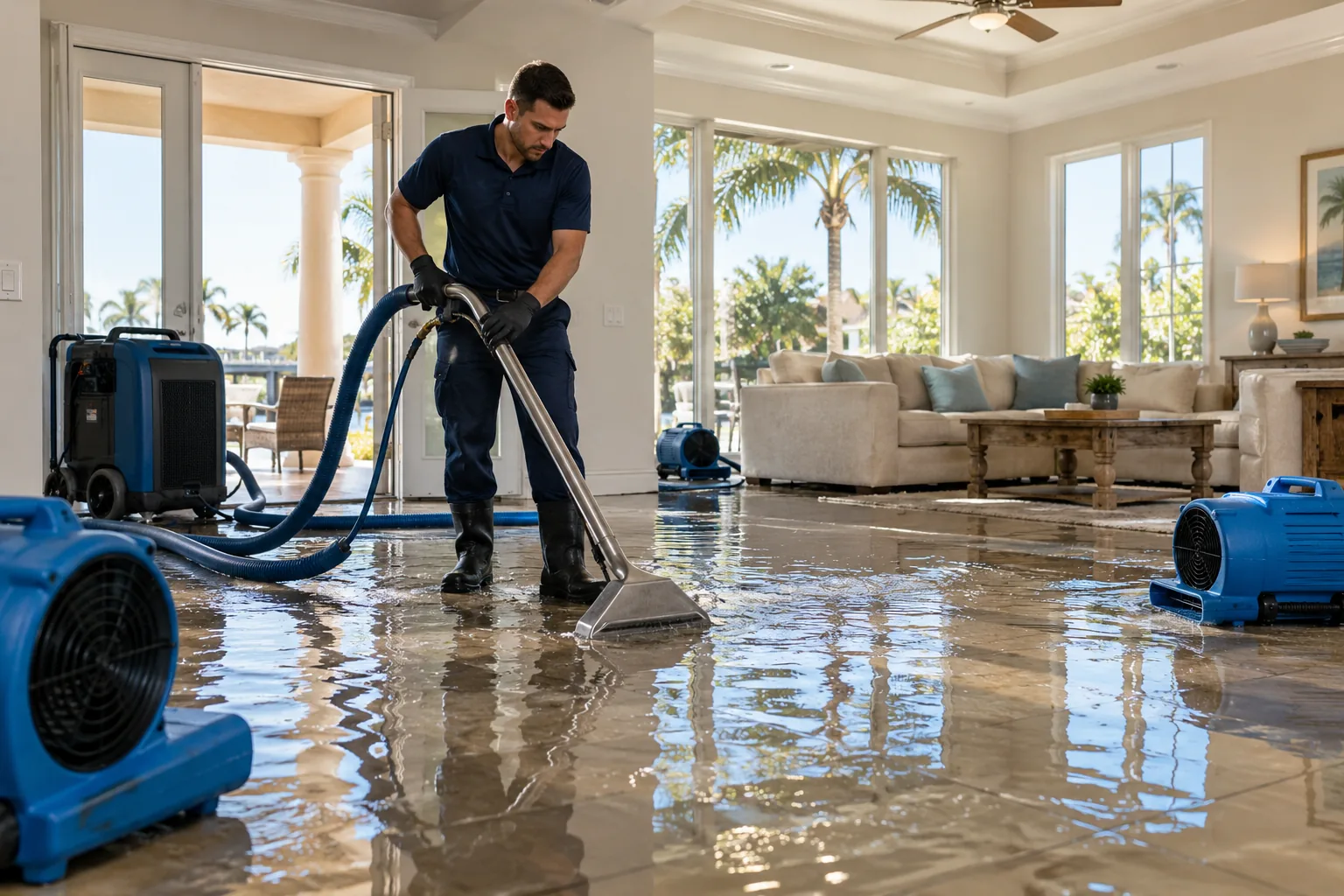
Sewage Cleanup in Florida
Controlled cleanup and sanitation for sewage backups and contaminated water incidents.
Coverage entries describe the service-area directory and do not represent a physical office at every listed ZIP.
Common situations connected to sewage cleanup
This page explains the service in plain language, connects it to related restoration work and provides a path to the city-level service pages where that coverage exists.
Sewer Backups
The response should follow the source, material condition, access and safety considerations.
Toilet Overflow With Contamination
The response should follow the source, material condition, access and safety considerations.
Drain Backups
The response should follow the source, material condition, access and safety considerations.
Wastewater Intrusion
The response should follow the source, material condition, access and safety considerations.
Contaminated Flooring
The response should follow the source, material condition, access and safety considerations.
Affected Porous Materials
The response should follow the source, material condition, access and safety considerations.

Use the supporting service to solve the actual problem, not just the visible symptom.
Controlled cleanup and sanitation for sewage backups and contaminated water incidents. A useful work plan considers what caused the condition, which materials are affected, what needs to be protected, and what documentation is needed before the next stage.
A practical sewage cleanup workflow
Initial call and scope review
The work scope should be based on verified conditions and the requirements of the property.
Safety and access assessment
The work scope should be based on verified conditions and the requirements of the property.
Service-specific work
The work scope should be based on verified conditions and the requirements of the property.
Documentation and progress checks
The work scope should be based on verified conditions and the requirements of the property.
Related restoration review
The work scope should be based on verified conditions and the requirements of the property.
Next-step planning
The work scope should be based on verified conditions and the requirements of the property.
How sewage cleanup can connect to broader restoration
Water Damage Restoration
Water extraction, cleanup, moisture assessment, structural drying and restoration planning for homes and businesses.
Fire Damage Restoration
Fire, smoke and soot cleanup with property stabilization, contents coordination, odor control and restoration planning.
Storm Damage Restoration
Storm and hurricane damage response for roof intrusion, wind damage, flooding, debris and temporary property protection.
Biohazard Cleanup
Professional biohazard cleanup, containment, decontamination and sanitation for sensitive property situations.
What Affects Sewage Cleanup Cost in Florida?
Professional sewage cleanup in Florida typically costs $2,000 to over $10,000. Sewage is Category 3 black water — the highest contamination class — which mandates removal of porous materials, full PPE protocols, and licensed waste disposal.
Backup volume & spread
A single-fixture backup vs. a main-line failure flooding multiple rooms — volume and spread drive the entire scope.
Porous material removal
Carpet, pad, drywall, insulation, and upholstery touched by sewage are removed, not cleaned. The more finished space affected, the bigger the demolition and rebuild.
HVAC contamination
If sewage aerosols reached ductwork, system cleaning is added — airborne pathogens in the supply air are non-negotiable.
Source repair
The plumber’s fix — clearing the blockage, repairing the line, or addressing root intrusion — is separate from the cleanup scope but must happen first.
How Sewage Cleanup Works, Step by Step
Sewage cleanup is black-water protocol per IICRC S500: contain it, remove what it touched, disinfect what remains — in that order.
1. Stop the source & protect occupants
The backup source is stopped (plumber), occupants and pets are kept clear, and HVAC is shut down to prevent aerosol spread.
2. Containment & PPE
The affected area is contained; technicians work in full PPE including respirators. Sewage carries bacteria, viruses, and parasites — this isn’t optional.
3. Extraction & bulk removal
Standing sewage is extracted with dedicated equipment (never the same gear as clean-water jobs); solid waste and debris are removed.
4. Removal of porous materials
Everything porous that sewage touched — carpet, pad, drywall, insulation — is cut out, bagged, and disposed as regulated waste.
5. Disinfection & drying
Remaining structural surfaces are cleaned and treated with EPA-registered disinfectants at proper dwell times, then dried to verified standard with drying logs.
Sewage Cleanup in Florida: Backups, Storms & Septic
Florida sewage backups have local drivers: aging cast-iron and clay sewer lines in older neighborhoods, root intrusion from aggressive subtropical growth, septic system failures in high-water-table areas (drain fields flood and back up), and municipal system overloads during heavy storm events. After major rain events, backups spike — call early.
Insurance note: sudden backups are often covered if you carry water/sewer backup endorsement — standard Florida policies frequently exclude it without the rider. Check your policy now, not after the backup. And document the source: plumber’s diagnosis of the failure mode matters for the claim.
Emergency
Active sewage cleanup in Florida? Call (833) 606-6010 now — fast response limits secondary damage.
Sewage Cleanup questions
When is sewage cleanup needed?
The answer depends on the loss, affected materials and current site conditions. A property-specific assessment is more reliable than a one-size-fits-all checklist.
What does sewage cleanup involve?
Controlled cleanup and sanitation for sewage backups and contaminated water incidents. The exact scope should follow the actual property conditions.
How does sewage cleanup connect to other restoration work?
Supporting services are often connected to a broader loss. For example, water extraction may lead into structural drying, while storm damage may lead into tarping and interior water mitigation.
Is sewage backup dangerous?
Yes. Sewage is Category 3 black water carrying bacteria, viruses, and parasites. Keep people and pets away, don’t run the HVAC, and don’t attempt cleanup without proper PPE and training.
Can carpet be saved after a sewage backup?
No — carpet, pad, and any porous materials touched by sewage are removed and disposed. They can’t be reliably decontaminated.
Does insurance cover sewage backup in Florida?
Often only with a water/sewer backup endorsement — many standard policies exclude it. Check your policy for the rider before you need it.
What causes sewer backups in Florida?
Root intrusion, aging pipes, grease buildup, septic failures in high-water-table areas, and municipal overload during heavy rains. A plumber’s camera inspection identifies the cause.
How long does sewage cleanup take?
The cleanup and disinfection phase: 2–5 days typically. Full restoration with rebuild: 2–6 weeks depending on demolition extent.
Related Restoration Services
Damage rarely involves just one trade. These services commonly connect to sewage cleanup projects.