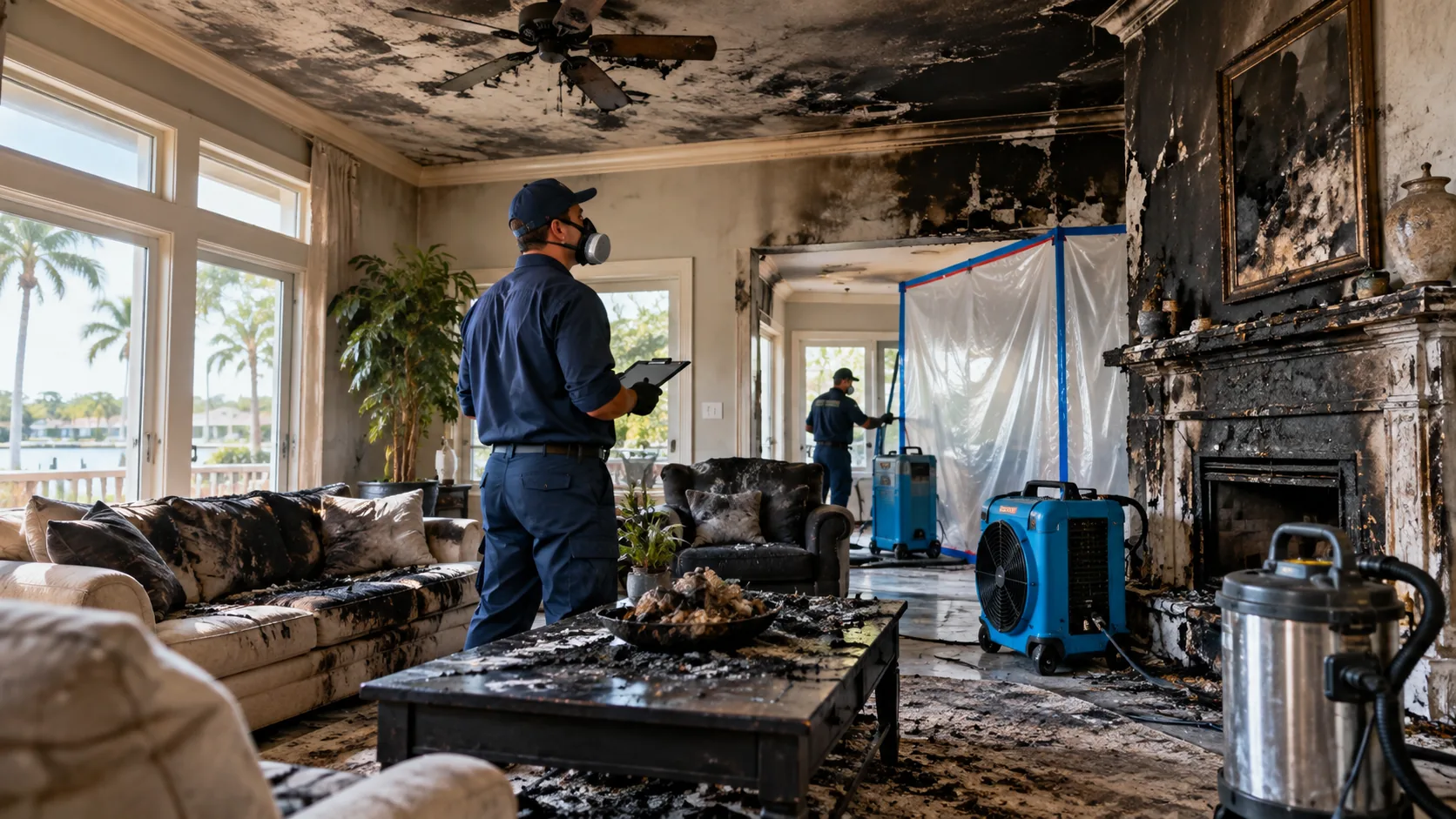
Biohazard Cleanup in Florida
Biohazard situations require controlled access, containment, appropriate protective measures, cleaning and documentation.
Coverage entries describe the service-area directory and do not represent a physical office at every listed ZIP.
The scope depends on the incident and may include containment, affected-material handling, decontamination, odor control and final site review.
Professional biohazard cleanup is built around containment, safe handling, cleaning, decontamination, waste considerations and a documented return-to-use process where appropriate. This page is organized around service intent, practical questions and the decisions property owners commonly face.
unattended death cleanup
Use the service page as the starting point, then move into the location page for the city and ZIP coverage that applies to the property.
trauma-scene cleanup
Use the service page as the starting point, then move into the location page for the city and ZIP coverage that applies to the property.
blood or bodily-fluid contamination
Use the service page as the starting point, then move into the location page for the city and ZIP coverage that applies to the property.
Common situations that deserve an organized response
Unattended Death Cleanup
Document the condition safely, note what changed, and ask for a service assessment that matches the loss.
Trauma-Scene Cleanup
Document the condition safely, note what changed, and ask for a service assessment that matches the loss.
Blood Or Bodily-Fluid Contamination
Document the condition safely, note what changed, and ask for a service assessment that matches the loss.
Suspected Biohazard Exposure
Document the condition safely, note what changed, and ask for a service assessment that matches the loss.
Contaminated Contents
Document the condition safely, note what changed, and ask for a service assessment that matches the loss.
Controlled Decontamination
Document the condition safely, note what changed, and ask for a service assessment that matches the loss.
Odor Related To Biological Contamination
Document the condition safely, note what changed, and ask for a service assessment that matches the loss.
Commercial Biohazard Incidents
Document the condition safely, note what changed, and ask for a service assessment that matches the loss.
Multi-Room Contamination
Document the condition safely, note what changed, and ask for a service assessment that matches the loss.
Sensitive Property Cleanup
Document the condition safely, note what changed, and ask for a service assessment that matches the loss.
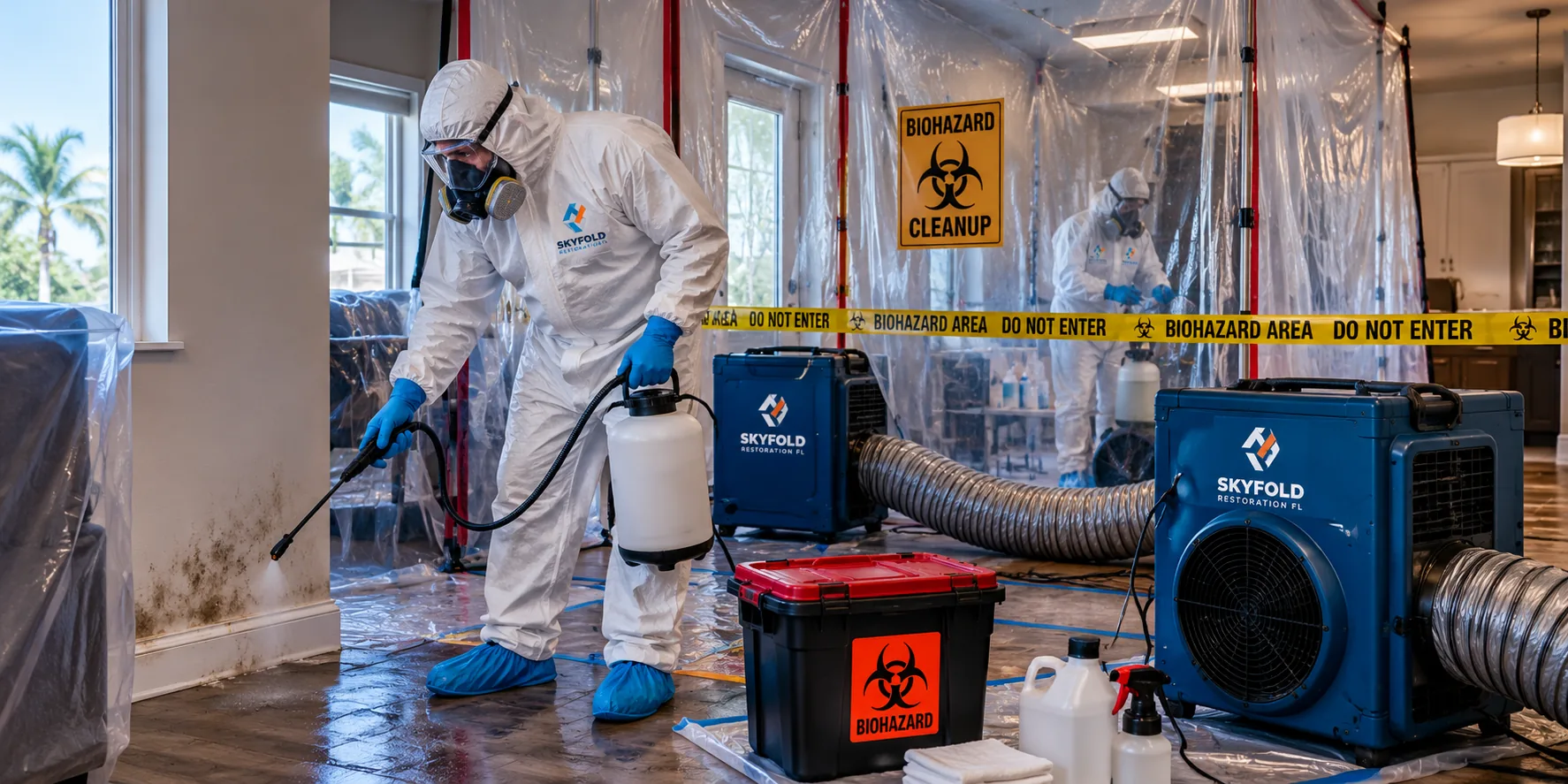
Before the restoration team arrives
Restrict unnecessary access to the affected area.
Keep the decision limited to what is safe and clearly observable.
Do not handle contaminated materials without appropriate protection.
Keep the decision limited to what is safe and clearly observable.
Keep children, pets and unauthorized occupants away from the work area.
Keep the decision limited to what is safe and clearly observable.
Avoid spreading contamination into clean areas.
Keep the decision limited to what is safe and clearly observable.
Document the incident from a safe location without disturbing the scene.
Keep the decision limited to what is safe and clearly observable.
Use a professional cleanup process suited to the specific contamination.
Keep the decision limited to what is safe and clearly observable.
A service-specific restoration workflow
Intake and restricted-area planning
Scope the work from verified conditions, affected materials, access and the current state of the property.
Site assessment and containment setup
Scope the work from verified conditions, affected materials, access and the current state of the property.
Controlled removal/cleanup
Scope the work from verified conditions, affected materials, access and the current state of the property.
Cleaning and decontamination
Scope the work from verified conditions, affected materials, access and the current state of the property.
Waste and documentation coordination
Scope the work from verified conditions, affected materials, access and the current state of the property.
Final inspection and return-to-use planning
Scope the work from verified conditions, affected materials, access and the current state of the property.
Homes, rentals, multifamily and commercial spaces
Single-family homes
The work plan follows the affected space, occupants, access and property use.
Condos and townhomes
The work plan follows the affected space, occupants, access and property use.
Apartments and multifamily properties
The work plan follows the affected space, occupants, access and property use.
Rental and vacation properties
The work plan follows the affected space, occupants, access and property use.
HOA-managed communities
The work plan follows the affected space, occupants, access and property use.
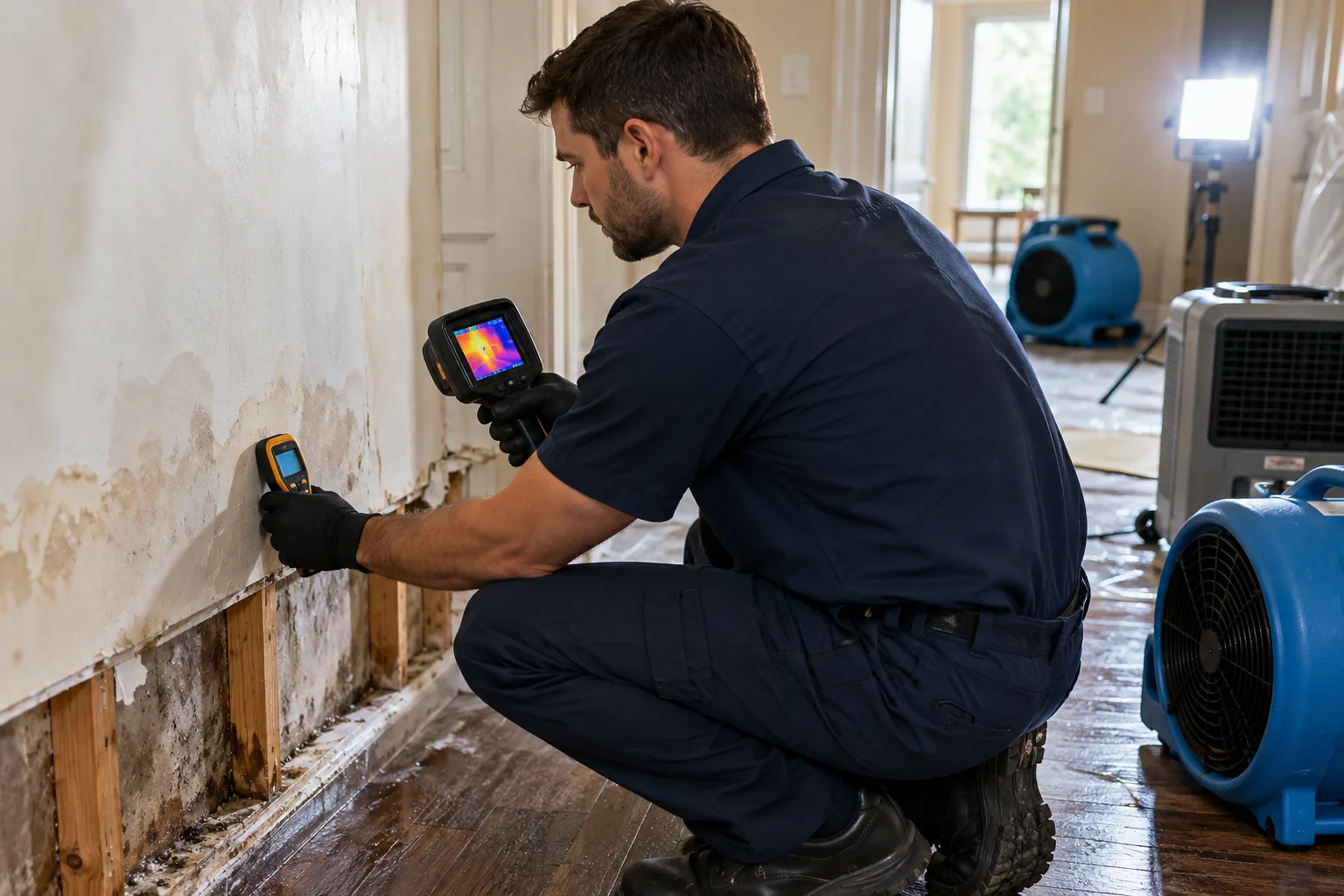
Keep a clear record of what changed.
A useful restoration record can include incident timing, photos, affected areas, temporary protection, service notes and progress information. Insurance coverage and claim decisions remain with the carrier.
Documentation supportBiohazard Cleanup FAQs
What is included in biohazard cleanup?
The exact scope depends on the incident. Professional work can include site assessment, containment, controlled cleaning, decontamination, affected-material handling and documentation.
Can I clean a biohazard situation myself?
Routine household cleaning may not address containment, exposure control or proper handling of contaminated materials. The safer approach is to restrict access and obtain a professional assessment for the specific situation.
Why is containment important?
Containment helps limit movement of contamination into unaffected areas and supports a controlled cleaning process.
Will biohazard cleanup remove odors?
Odor treatment is considered as part of the overall source and contamination cleanup. The appropriate approach depends on the cause and condition of the affected materials.
Is every biohazard cleanup the same?
No. The work plan should reflect the type of contamination, affected materials, property layout, access limitations and the required decontamination process.
What is biohazard cleanup?
The professional cleaning, disinfection, and disposal of biological hazards — blood, bodily fluids, unattended death scenes, trauma, sewage, and infectious materials — following OSHA bloodborne-pathogen standards.
Can’t regular cleaners handle it?
No. Biohazard cleanup requires bloodborne-pathogen training, specialized PPE, EPA-registered disinfectants used at proper dwell times, and licensed regulated-waste disposal. Standard cleaning doesn’t decontaminate and creates liability.
How much does biohazard cleanup cost?
Typically $1,500–$8,000+ depending on situation type, area, penetration, and disposal requirements. Homeowners insurance often covers trauma and unattended-death cleanup — check your policy.
Is biohazard cleanup discreet?
Professional providers use unmarked vehicles, work discreetly, and protect family privacy as standard practice. You can request specific scheduling to avoid attention.
How fast should biohazard cleanup happen?
As soon as the scene is released by authorities. In Florida’s heat, delays intensify odor and contamination — hours matter.
Need help with biohazard cleanup?
Use the city pages for a more specific local path, or call the emergency line directly.
Call (833) 606-6010What Affects Biohazard Cleanup Cost in Florida?
Professional biohazard cleanup in Florida typically costs $1,500 to $8,000+ depending on the situation type, affected area, and disposal requirements. Regulated medical waste disposal, PPE protocols, and specialized decontamination put biohazard work in a different cost class than standard cleaning.
Situation type
Unattended death, trauma, sewage, hoarding with biological hazards, and infectious-disease decontamination each carry different protocols and time requirements.
Affected area & penetration
Surface-level incidents vs. fluids that penetrated subflooring, wall cavities, or HVAC — penetration multiplies the scope.
Regulated waste disposal
Biological waste must be transported and disposed per OSHA and Florida regulations — licensed medical-waste disposal is a fixed cost line.
Contents handling
Porous belongings in the affected area often can’t be decontaminated and must be inventoried and disposed — documented for insurance or estate purposes.
How Biohazard Cleanup Works, Step by Step
Biohazard cleanup follows OSHA bloodborne-pathogen standards: protect people first, contain the area, remove the hazard, verify decontamination.
1. Assessment & safety plan
The scene is assessed, a site-specific safety plan is written, and the work area is secured. Nothing begins without PPE and containment planned.
2. Containment
The affected area is sealed under negative pressure where appropriate. HVAC is isolated so contaminants don’t migrate through ductwork.
3. Removal of biological materials
All visible biological matter and irreversibly contaminated porous materials (carpet, pad, drywall, upholstery) are removed, bagged, and labeled as regulated waste.
4. Cleaning & disinfection
Remaining surfaces are cleaned and treated with EPA-registered hospital-grade disinfectants, following proper dwell times — chemistry needs contact time to work.
5. Deodorization & verification
Enzymatic treatments and hydroxyl or ozone deodorization address residual odor. ATP testing or equivalent verifies sanitization levels before the area is released.
Biohazard Cleanup in Florida: Heat, Law & Discretion
Florida’s heat makes biohazard response time-critical — decomposition and odor intensify fast in warm conditions, and unattended-death scenes in non-air-conditioned Florida properties deteriorate in hours, not days. Rapid, discreet response isn’t just compassionate; it limits the scope.
Florida law requires regulated medical waste disposal through licensed transporters — this isn’t optional and isn’t a job for a general cleaner. Reputable providers work directly with law enforcement, property managers, and insurers while protecting family privacy; unmarked vehicles and discreet scheduling are standard practice, not upgrades.
Emergency
Active biohazard cleanup in Florida? Call (833) 606-6010 now — fast response limits secondary damage.
Related Restoration Services
Damage rarely involves just one trade. These services commonly connect to biohazard cleanup projects.