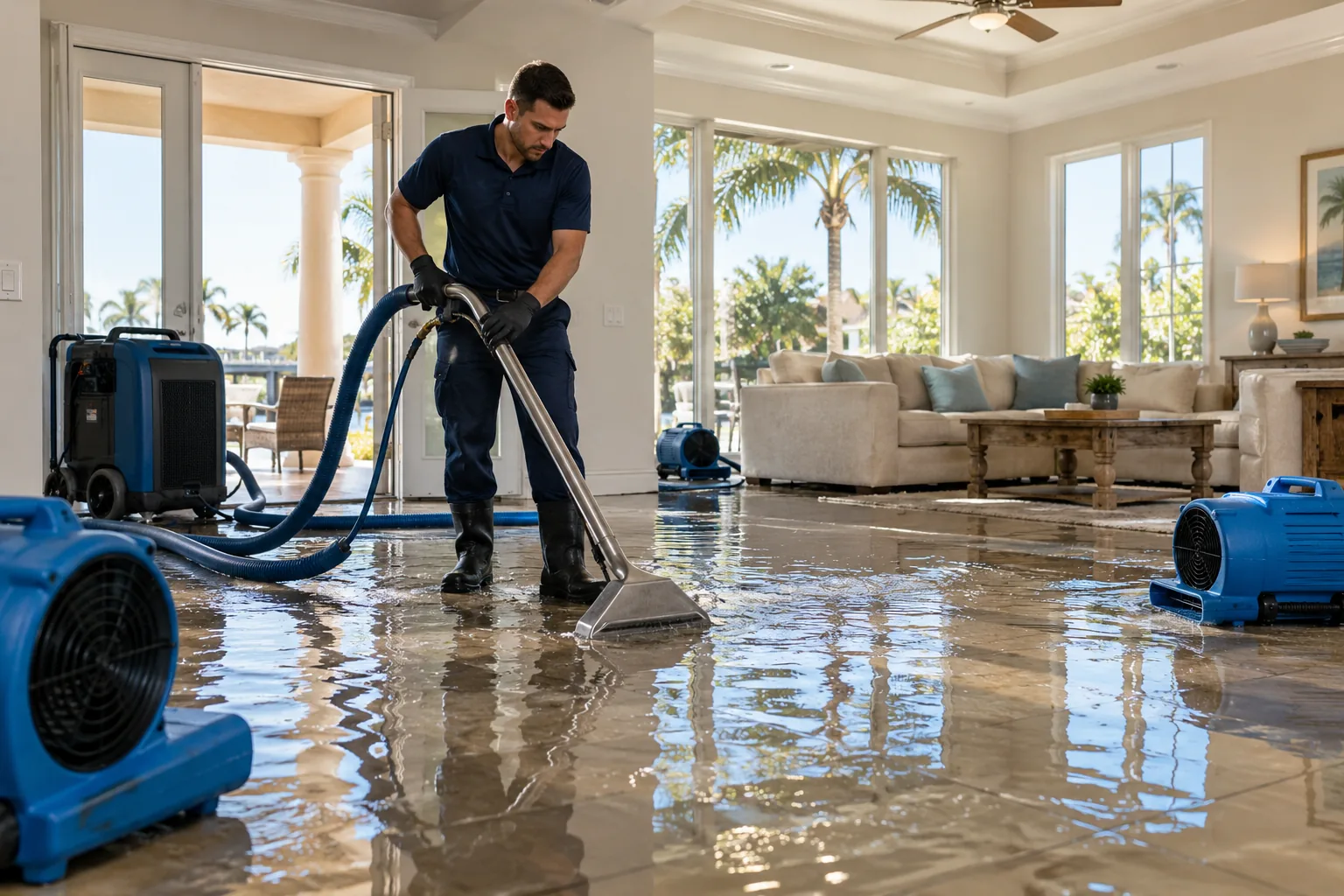
Here's an uncomfortable truth about water damage insurance claims: the adjuster wasn't there when it happened. Everything they decide — what's covered, what's not, how much it's worth — comes from the evidence in front of them. Good documentation doesn't just support your claim; in disputed cases, it is your claim. This guide shows you exactly what to capture and how.
What should I photograph after water damage?
The short answer: Everything, in this order: the source (burst pipe, failed fitting, roof breach), the water at its worst (standing water, active dripping), every affected room in wide shots, close-ups of damaged materials and belongings, and water lines or stains with a ruler for scale. Then shoot a narrated video walkthrough of the whole property.
The most common documentation failure is photographing the aftermath instead of the event. Clean, dry rooms with a few stains tell the adjuster nothing about severity. The photos that move claims are the ugly ones: water pouring through a light fixture, a buckled floor mid-destruction, the failed supply line still dripping. Take them before you clean, before the mitigation crew arrives, before anything changes. You can always delete extras; you can never go back for the photos you didn't take.
The narration trick
Video with voiceover is more persuasive than silent photos. Walk through slowly and narrate: "This is the master bedroom, Tuesday 7:40 AM, water coming through the ceiling from the upstairs bathroom. The carpet is saturated wall to wall." State dates, times, and what you're seeing. It takes five minutes and creates a record that's very hard to dispute later.
What written records do I need for a water damage claim?
The short answer: A timeline (when discovered, when water was stopped, who you called and when), a room-by-room inventory of damaged items with approximate age and value, all receipts for emergency expenses, and copies of every communication with your insurer — ideally in writing.
Start a simple claim file — a folder on your phone or a physical envelope — and put everything in it from day one. The timeline matters because insurers look for prompt action: "discovered 7 AM, water off 7:10, plumber called 7:30, mitigation started same day" tells a story of a responsible owner. Gaps and delays invite questions about whether the damage worsened through neglect. For damaged belongings, list item, brand, approximate purchase year, and replacement cost — photos of each item next to the damage help enormously.
Should I wait for the adjuster before starting cleanup?
The short answer: No — you have a duty to mitigate further damage, and waiting can actually hurt your claim. Document thoroughly first, then begin emergency mitigation (water extraction, drying). Insurers expect you to prevent the loss from getting worse; they don't expect you to live in standing water awaiting their schedule.
This is the balance the policy language calls "mitigate and document." Take your photos and video, then get the water out. Professional insurance documentation services exist precisely for this window — they capture moisture readings, scope the damage, and produce the kind of structured report adjusters trust, all while mitigation proceeds. If your insurer's adjuster can't visit for days, your documentation is the inspection.
What expenses can I claim beyond the repairs?
The short answer: Typically: emergency mitigation costs, additional living expenses (hotel, meals, laundry) if the home is uninhabitable, damaged personal property (contents coverage), and sometimes the cost of protecting undamaged property. Every policy differs — read your "loss of use" and contents sections — but the universal rule is: if you don't track it with receipts, you can't claim it.
Additional living expenses (ALE) is the most underclaimed category. If drying equipment and demolition make your home unlivable for a week, the hotel and restaurant bills are generally covered up to your policy's ALE limit — but only with receipts and only if the displacement was necessary. Keep every receipt, no matter how small. A $12 laundry receipt seems silly until you have forty of them. Our cost guide breaks down typical claim categories and what they include.
What are the biggest documentation mistakes?
The short answer: Cleaning up before photographing, throwing away damaged items and failed parts, having only verbal agreements with contractors, not recording moisture readings, and failing to document pre-existing condition. Each of these gives the insurer a reason to reduce or dispute the claim.
- Premature disposal: That failed washing machine hose is evidence of a sudden event vs. a maintenance issue. Bag it, tag it, keep it.
- No moisture logs: "The wall was wet" is a claim; meter readings of 28% vs. a 10% dry standard are proof. Ask your contractor for the logs.
- Verbal-only communication: After every phone call with your insurer, send a confirming email: "Per our call today, you advised..." Paper trails win disputes.
- Missing the "before": If you have pre-loss photos of the rooms (real estate listings, holiday photos), save them — they establish condition and contents.
Dealing with this right now?
You don't have to figure out the next step alone. Call and describe what you see — where the damage is, how long it's been there, and whether it's still spreading — and you'll get a straight answer about what to do next.
Call (833) 606-6010 Request help online
emergency line. If there's an active life-safety danger, call 911 first. Email: help@skyfoldrestorationfl.com
Frequently asked questions
How soon must I file a water damage claim in Florida?
Policies require "prompt" notice — in practice, report within days, not weeks. Florida law has specific claim-handling timelines for insurers, but your duty is to notify quickly. Late reporting is one of the most common reasons claims get complicated.
Can I choose my own restoration contractor, or must I use the insurer's?
You can choose your own contractor — insurers may suggest preferred vendors, but you are not obligated to use them. Choose based on competence and documentation quality, not the insurer's convenience.
What if the adjuster's estimate seems too low?
Get an independent detailed estimate, compare line by line, and present the discrepancy with your documentation (photos, moisture logs, material measurements). You can also invoke your policy's appraisal clause. Detailed documentation is what gives you leverage here.
Do I need to keep a sample of damaged drywall or flooring?
Photograph it thoroughly at minimum; keeping physical samples of failed parts (pipes, hoses, fittings) is strongly recommended. For removed drywall/flooring, photos with measurements usually suffice — but don't dispose of anything until the adjuster has had a reasonable chance to inspect.
How do I document damage in a rental or condo?
Document your unit thoroughly, notify your landlord or HOA in writing immediately, and understand the split: your HO-6 or renters policy covers your contents and interior finishes; the master policy or landlord covers the structure. See our condo/HOA guide for how this division works in practice.
What is a proof of loss, and do I need one?
A proof of loss is a formal sworn statement of your claim amount, which insurers can require — in Florida, typically within 60 days of their request. Your documentation file (photos, inventory, receipts, estimates) becomes the basis for it. Take the deadline seriously; missing it can jeopardize the claim.