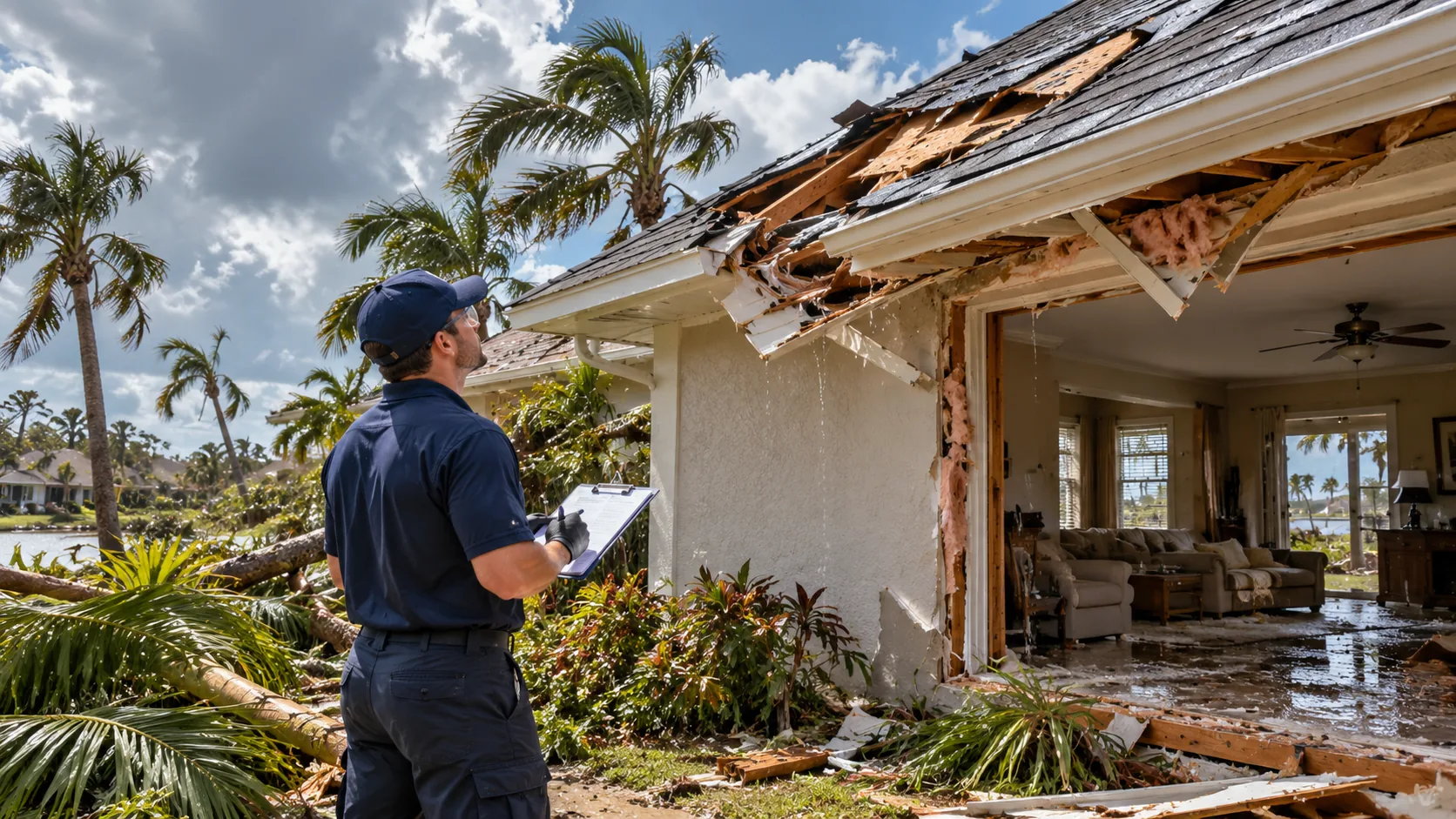
Storm & Hurricane Damage FAQs
Storm & Hurricane Damage FAQs for Florida property owners. Clear answers about safety, emergency steps, cleanup, drying, documentation and restoration planning.
Coverage entries describe the service-area directory and do not represent a physical office at every listed ZIP.
Storm & Hurricane Damage FAQs
Answers about hurricane and storm damage in Florida — immediate safety, documentation, tarping, insurance claims, and avoiding post-storm scams.
What are the first priorities after a hurricane?
The short answer: People first (account for family, check on vulnerable neighbors), then hazards (downed lines, gas, floodwater, structural instability), then property assessment from a safe distance, then documentation, then mitigation (tarping, board-up, water extraction). Don't rush any step — post-storm injuries spike from haste.
The order matters because each step protects the next: you can't document well from a hospital bed, and mitigation without documentation weakens the claim. Once safe, the exterior walk-around identifies openings — every breach is both a claim item and a mitigation priority. Our hurricane aftermath guide has the full 72-hour playbook.
Should I tarp my roof before the adjuster comes?
The short answer: Yes — photograph the damage first, then tarp immediately. Emergency tarping is expected mitigation, it's reimbursable, and waiting for the adjuster while rain enters multiplies the damage. Don't begin permanent repairs before inspection, but temporary protection should never wait.
The line is temporary vs. permanent: tarp = expected; new roof before inspection = problematic. Keep the tarp invoice and photograph it in place — it's claim evidence of responsible mitigation. See our roof tarping guide for what proper tarping looks like.
How do hurricane deductibles work in Florida?
The short answer: Most Florida policies have a separate hurricane deductible stated as a percentage of dwelling coverage — commonly 2%–5%. On a $300,000 policy with a 2% deductible, you pay the first $6,000 of hurricane damage. It applies per hurricane season (usually), not per claim.
This surprises owners because it's so much larger than the standard all-other-perils deductible (often $1,000–$2,500). Before hurricane season, know both numbers and have a plan for covering the hurricane deductible out of pocket — it's the most common reason storm repairs stall. Our cost guide and financing guide cover the money mechanics.
The 72 hours after a hurricane: priorities in order
What you do in the first three days after a storm shapes everything that follows — your safety, your claim, and your repair costs. The order matters because some actions protect you while others, done too early, can hurt your claim.
- Hours 0–6: safety first. Watch for downed power lines, standing water that may hide electrical hazards, and structural damage. Don't enter rooms with sagging ceilings. If you smell gas, leave immediately.
- Hours 6–24: document everything. Photograph and video all damage before moving or discarding anything. Capture wide shots for context and close-ups of specific damage. This documentation is the foundation of your claim.
- Hours 24–48: mitigate further damage. Your policy requires you to prevent additional loss — tarp the roof, cover broken windows, move undamaged belongings away from wet areas. Keep every receipt.
- Hours 48–72: notify and organize. File your claim, start a claim log, and get professional assessments. Avoid signing anything under pressure.
Understanding your hurricane deductible before you file
Florida's hurricane deductible surprises many homeowners because it works differently from the standard deductible. It's typically a percentage of your dwelling coverage — commonly 2–5% — not a flat dollar amount. On a $400,000 dwelling limit with a 2% hurricane deductible, you'd pay $8,000 out of pocket before insurance contributes. That single fact changes the math on whether smaller claims are worth filing.
The deductible applies per hurricane season, not per storm in most policies — once you've satisfied it for one named storm, a second storm in the same season typically falls under your standard deductible. It also only triggers for damage from a named hurricane; tropical storm damage usually carries the lower standard deductible. Because these details vary by carrier and policy, read your declarations page before the storm, not after.
More detail: what to do after hurricane damage and storm damage documentation.
What should I do after a Florida storm damages my home?
Confirm the property is safe, avoid electrical and unstable areas, document damage and address openings or interior water intrusion as appropriate.
Why might a roof tarp be needed?
Temporary protection can reduce continued exposure through an open or damaged roof while permanent repair is planned.
Can storm damage include water damage?
Yes. Roof openings, wind-driven rain, flooding and damaged exterior components can create overlapping water losses.
What scams should I watch for after a hurricane?
Door-to-door unlicensed contractors, high-pressure sales (especially involving assignment of benefits — never sign claim rights away under pressure), demands for large cash deposits, and "FEMA certified" claims (FEMA doesn't certify contractors). Verify licenses at the Florida DBPR website before hiring anyone.
How long does hurricane claim settlement take?
Longer than normal claims — after major hurricanes, adjuster backlogs stretch weeks to months. File promptly, document thoroughly, communicate in writing, and keep mitigating. Detailed documentation reduces back-and-forth and speeds your individual claim even when the system is slow.
Does homeowners insurance cover storm surge?
No — storm surge is flooding, covered only by flood insurance (NFIP or private). This is the coverage gap that devastates uninsured owners after hurricanes. If you're in any Florida coastal or low-lying area, review your flood coverage before the next storm, not after.
What if my home is uninhabitable?
Your policy's additional living expenses (ALE) coverage pays for hotel, meals, and related costs up to your limit — with receipts. Document the uninhabitability, notify your insurer, and keep every receipt from day one. FEMA individual assistance may also help for declared disasters.
Should I hire a public adjuster after hurricane damage?
A public adjuster works for you — not the insurance company — and can be worth it on large or disputed claims, typically charging around 10% of the settlement in Florida (capped by state law). For straightforward claims, a well-documented file often settles fairly without one. Consider a public adjuster if your claim is denied, underpaid, or involves complex damage. Avoid anyone who solicits you door-to-door right after a storm, and never sign over your claim rights without reading the contract.
Related guidance
Use the broader resource hub, service pages and local city pages to move from a question to a location-specific action plan.
Need to talk through a property loss?
Give the city, ZIP code and damage type when you call. For immediate life-safety emergencies, contact 911 first.