Restoration Safety FAQs
Restoration Safety FAQs for Florida property owners. Clear answers about safety, emergency steps, cleanup, drying, documentation and restoration planning.
Coverage entries describe the service-area directory and do not represent a physical office at every listed ZIP.
Restoration Safety FAQs
Safety guidance for property damage situations — electrical hazards, structural risks, contamination, air quality, and when to stay out entirely.
Is it safe to enter my property after damage?
The short answer: It depends on the damage type and severity. After fire: only after official release, and cautiously. After flooding: only after power is confirmed off and structure checked. After storms: watch for structural shifting, gas leaks, and downed lines. When any of these are uncertain, wait for professional assessment.
The decision framework: electrical (is power off or safely isolated?), structural (does anything look shifted, sagging, or cracked?), air (smoke, gas, chemical odors?), contamination (sewage, floodwater, biohazard?), and stability (could anything fall or collapse?). If you can't answer all five confidently, limit entry to what's necessary and get assessment quickly. Children, elderly, and pets should stay out until the property is cleared — they can't evaluate risks the way you can.
What are the electrical dangers after water or fire damage?
The short answer: Water in contact with wiring, outlets, panels, or appliances creates electrocution risk — including through standing water itself. Fire damages wire insulation invisibly. Never touch electrical panels while wet or standing in water; kill breakers for affected areas; and have an electrician verify before re-energizing.
The specific rules: don't touch the panel with wet hands or while standing in water (if the panel area is wet, call the utility); unplug don't yank cords in wet areas; assume all wiring in fire-affected areas is compromised until inspected; and don't restore power to a flooded building until it's been professionally evaluated. Electrocution is quick, silent, and unforgiving — this is the hazard to take most seriously.
How do I protect my family during the restoration work itself?
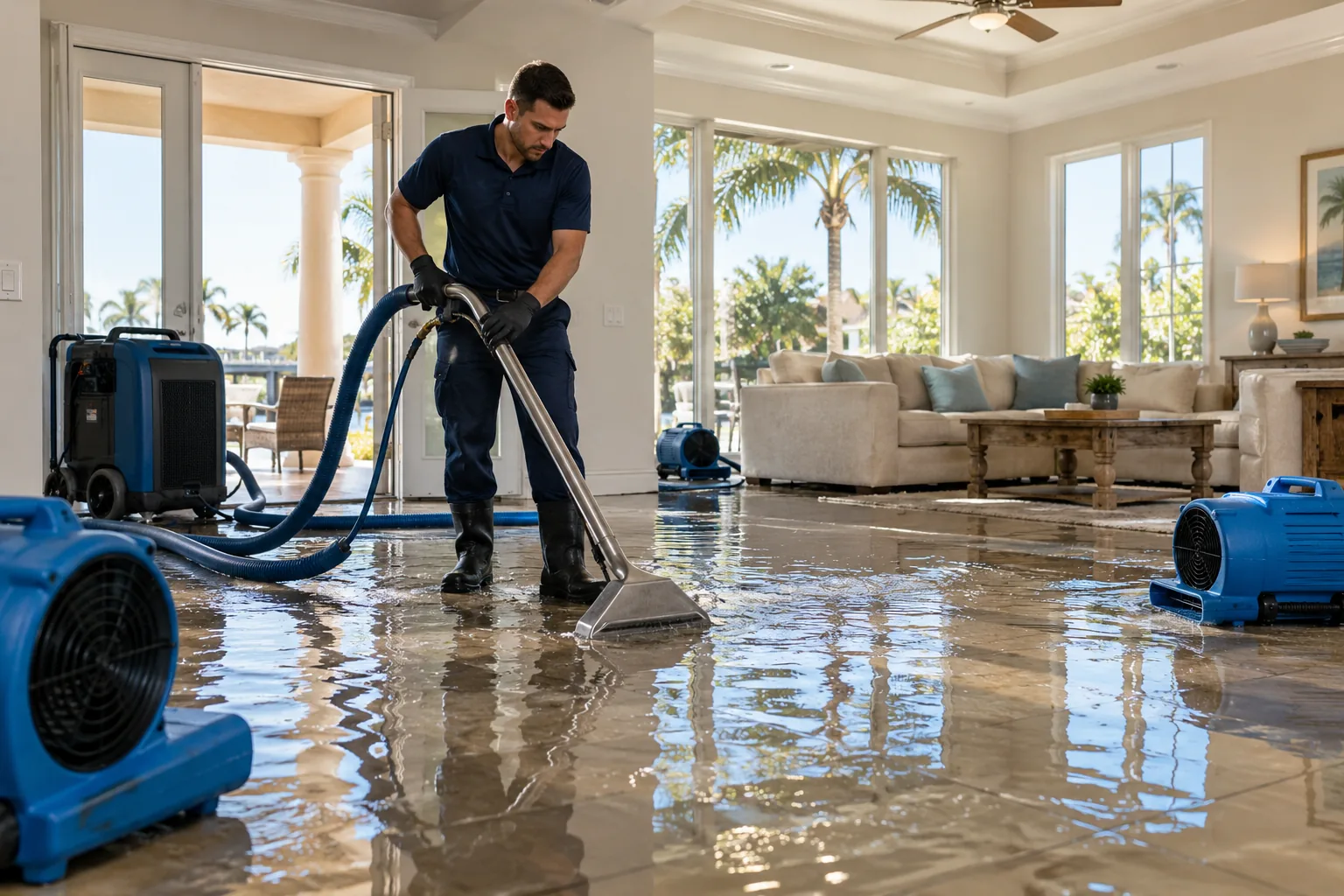
The short answer: Establish boundaries: keep kids and pets away from work zones, containment areas, and equipment; don't move or unplug drying equipment; maintain ventilation as directed; and follow the contractor's safety guidance about which areas are usable. Communicate the rules clearly — curiosity and work zones don't mix.
Practical points: drying equipment is hot, loud, and has cords — treat it like construction equipment, not furniture. Containment barriers aren't play areas — they're keeping contamination in. If demolition is generating dust, keep vulnerable household members (asthma, infants, elderly) away from the work area even with containment. And never let children play in or around flood/sewage-affected areas, even after surface cleaning — verification matters.
Hidden safety hazards after water and fire damage
The obvious dangers — standing water, charred structures — are easy to respect. The hidden ones cause more injuries because people underestimate them.
- Electrical hazards. Water and electricity are a lethal combination. Don't enter flooded rooms where outlets, appliances, or breaker panels may be energized. Even after water recedes, moisture inside walls can create shock risks until an electrician verifies safety.
- Structural weakening. Waterlogged drywall ceilings can collapse without warning hours after the event. Fire-damaged framing may look intact while having lost significant strength. Sagging, new cracks, or doors that suddenly won't close are warning signs.
- Contamination. Floodwater and sewage backups carry bacteria, viruses, and chemicals. Skin contact, especially with open cuts, can cause serious infection. Keep children and pets completely away from contaminated areas.
- Air quality. Soot particles, mold spores, and chemical residues from fire suppression can irritate lungs and trigger asthma. If you smell strong odors or see visible particulates, limit time in the space until it's professionally assessed.
- Slip and trip hazards. Wet tile, displaced rugs, and debris-strewn floors cause a large share of post-disaster injuries. Wear sturdy closed-toe shoes, not sandals.
Protecting children, pets, and elderly family members
Vulnerable household members need extra consideration during and after a damage event. Children's developing lungs are more sensitive to mold spores and smoke particulates; keep them out of affected areas entirely until remediation is verified complete. Pets should be relocated during active work — the noise, strangers, open doors, and chemical cleaners create escape and exposure risks, and some deodorization treatments aren't pet-safe until fully ventilated.
Elderly family members face compounded risks: reduced mobility makes navigating disrupted homes hazardous, and respiratory or immune conditions amplify the effects of poor air quality. If the home's HVAC is compromised or large areas are under containment, arranging temporary accommodation for elderly residents during the active work phase is often the safest choice. Discuss the plan with the restoration project manager — experienced crews are used to working around these needs.
When should I stay out of an area?
Stay out when there are electrical hazards, unstable structures, contaminated water, unsafe ceilings or other clear risks.
Should I turn electrical systems back on after flooding?
Do not re-energize wet electrical systems. Use qualified professionals to address electrical safety.
Can I clean contaminated water myself?
Do not assume contaminated water can be handled like clean water. Limit exposure and use an appropriate professional response.
What PPE should I wear if I must enter a damaged area?
Minimum: sturdy closed boots, gloves, eye protection, and a P100 respirator for dust/mold/soot (not a paper dust mask). For sewage or biohazard: don't enter without professional-grade protection — or better, don't enter at all until it's remediated.
Is it safe to run the AC after water or fire damage?
Not until assessed. After water damage, the system may spread mold or have wet electrical components. After fire, ducts likely contain soot. After sewage/biohazard, the system can distribute contaminants. Keep it off until a professional clears it — in Florida's heat this is uncomfortable but necessary.
What about gas leaks after storms or fires?
If you smell gas (rotten egg odor): leave immediately, don't flip switches or use phones inside, and call the gas utility or 911 from outside. Don't re-enter until cleared. This is non-negotiable — gas explosions are a leading post-disaster killer.
Are there risks from mold exposure during cleanup?
Yes — disturbing mold releases spores. Don't DIY large mold areas; professionals use containment and respirators for a reason. If you must be near mold work, wear a P100 respirator, limit time, and keep vulnerable people away entirely. Disturbing mold without containment spreads it — which is why containment protocol exists.
Related guidance
Use the broader resource hub, service pages and local city pages to move from a question to a location-specific action plan.
Need to talk through a property loss?
Give the city, ZIP code and damage type when you call. For immediate life-safety emergencies, contact 911 first.