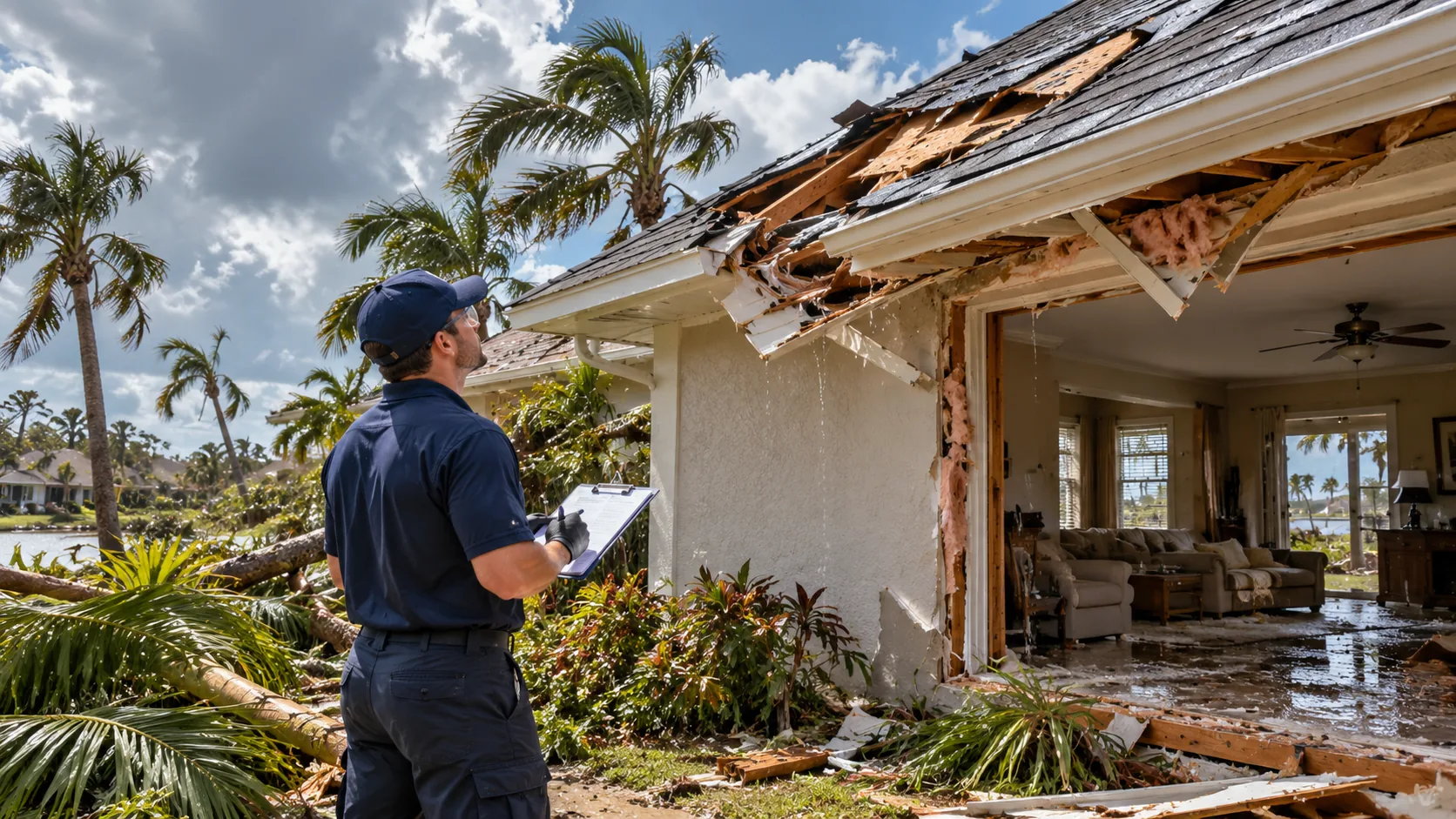
The hurricane has passed. The sky is clear, the streets are a mess, and your property needs attention. What you do in the next 72 hours shapes your safety, your insurance claim, and your recovery timeline. This is the calm, ordered playbook for the chaotic days after a Florida hurricane.
What should I do first after a hurricane?
The short answer: In order: check that everyone is safe and account for family members; avoid hazards (downed lines, floodwater, gas smells, damaged structures); check on neighbors, especially elderly ones; then assess your property from a safe distance before entering. Only after safety is handled do documentation and mitigation begin.
The post-storm period is genuinely dangerous — historically, a significant share of hurricane fatalities happen after landfall, from electrocution, carbon monoxide (generators in garages), drowning in floodwater, and accidents during cleanup. Treat every downed line as live, never run a generator indoors or in a garage, and don't wade through floodwater. Once people are safe, do a careful exterior walk-around: look for structural shifting, roof damage, broken windows, and gas odors before going inside. If the building looks compromised, stay out until it's assessed.
How do I assess hurricane damage to my property?
The short answer: Systematically, outside to inside: roof and exterior envelope first (missing roofing, broken windows, siding damage, fallen trees), then interior room by room (water intrusion, ceiling stains, wet flooring), then systems (electrical, HVAC, plumbing). Photograph everything before touching anything.
Work in a fixed pattern so you don't miss areas — e.g., clockwise around the exterior, then floor by floor inside. For the roof, stay on the ground (use zoom) or hire inspection; post-hurricane roofs are treacherous. Note not just damage but openings — every breach is both a claim item and a mitigation priority. Fallen trees: photograph where they were and what they hit before cutting. Our storm documentation guide has the detailed photo checklist, and our storm restoration service covers professional assessment.
Damage triage categories
| Priority | Examples | Action |
|---|---|---|
| Immediate (hours) | Open roof, broken windows, active water entry, gas leak, structural instability | Tarp, board-up, shut utilities, evacuate if needed |
| Urgent (days) | Standing water, soaked interiors, downed trees on structures | Extraction, drying, tree removal from buildings |
| Important (weeks) | Cosmetic damage, fence, landscaping, non-structural repairs | Schedule with vetted contractors; document meanwhile |
How do hurricane insurance claims work in Florida?
The short answer: Report promptly to your homeowners insurer (and flood insurer separately if you have flood damage), document thoroughly, mitigate further damage, and expect the process to take longer than normal claims — after major hurricanes, adjuster backlogs stretch for weeks to months. Know your hurricane deductible in advance.
Three things catch Florida owners off guard. First, the hurricane deductible: it's a percentage of your dwelling coverage (commonly 2–5%), not a flat amount — on a $300,000 policy, that's $6,000–$15,000 out of pocket before coverage begins. Second, coverage splitting: wind damage goes to homeowners, flood (storm surge, rising water) goes to flood insurance — and the two often dispute the boundary. Document wind openings and water intrusion separately. Third, contractor fraud spikes after every hurricane: verify licenses at the state DBPR website, never pay large deposits in cash, and be deeply skeptical of anyone who "noticed damage" you didn't. Our cost guide and financing guide cover the money side in detail.
What scams should I watch for after a hurricane?
The short answer: The big three: unlicensed contractors going door to door, high-pressure "sign today" sales tactics (especially involving assignment of benefits forms — never sign away your claim rights under pressure), and demands for large upfront cash payments. Legitimate contractors are busy after storms; they don't need to chase you down the street.
- Verify the license: Florida requires licensing for most restoration and roofing work — check at the DBPR website before hiring anyone.
- Never sign an AOB under pressure: Assignment of Benefits transfers your claim rights to the contractor. Florida reformed these laws because of abuse; understand what you're signing and get advice first.
- Deposits: reasonable deposits are normal; demands for 50%+ cash upfront are not.
- "FEMA certified" contractors: FEMA doesn't certify contractors — anyone claiming this is misrepresenting.
- Price gouging: Florida's price-gouging law activates during declared emergencies; report outrageous pricing.
How long does hurricane recovery take?
The short answer: Emergency mitigation: days. Drying and remediation: weeks. Full reconstruction: months — and after major hurricanes, contractor and material shortages can extend timelines to 6–18 months for heavily damaged properties. Plan for the long haul and keep your documentation organized throughout.
The emotional arc matters here: the first two weeks feel productive (cleanup, tarps, adjusters), then progress seems to stall during the long middle (waiting on contractors, materials, claim supplements). This is normal. What helps: a single organized claim file, written communication with your insurer, a realistic timeline from your contractor in writing, and understanding that after widespread events, you're competing for finite contractor capacity. Patience plus organization beats frantic contractor-hopping, which usually resets your place in every queue. For condo owners, add HOA coordination to the timeline — our condo/HOA guide explains that layer.
Dealing with this right now?
You don't have to figure out the next step alone. Call and describe what you see — where the damage is, how long it's been there, and whether it's still spreading — and you'll get a straight answer about what to do next.
Call (833) 606-6010 Request help online
emergency line. If there's an active life-safety danger, call 911 first. Email: help@skyfoldrestorationfl.com
Frequently asked questions
Should I file a claim for minor hurricane damage?
Compare the repair cost against your hurricane deductible first. If damage is clearly below the deductible, filing creates a claim record with no payout. If it's close or above, file — and remember that hidden damage (attic moisture, roof deck issues) often exceeds visible damage. When in doubt, get a professional assessment before deciding.
What if my home is uninhabitable after the hurricane?
Check your policy's additional living expenses (ALE) coverage — it covers hotel, meals, and related costs up to your limit, with receipts. Document the uninhabitability (photos, and ideally your insurer's acknowledgment). Keep every receipt from day one.
Can I do my own temporary repairs?
Yes for basic mitigation (tarps at ground level, board-up, water removal), and insurers expect reasonable mitigation efforts. But prioritize safety — no roof work, no electrical work, no structural assessment beyond visual. Keep receipts for materials; they're claimable.
What help is available besides insurance?
FEMA individual assistance (for declared disasters — covers temporary housing and emergency repairs, not full restoration), SBA disaster loans (low-interest, for homeowners and businesses), and various nonprofit/volunteer organizations. These supplement insurance; they don't replace it. Apply early — funds are finite.
How do I handle a dispute with my insurance company?
Document everything in writing, get independent estimates, consider your policy's appraisal clause, and know that Florida has a robust regulatory framework — the Department of Financial Services handles consumer complaints. For large disputes, a licensed public adjuster or attorney may be warranted. Never accept a lowball offer out of exhaustion without understanding your options.
When is it safe to return home after evacuating?
When authorities say so — not when the sky looks clear. Hazards persist: flooding, downed lines, gas leaks, curfews, and lack of services. Returning early risks both safety and getting stranded without support. Wait for the official all-clear for your area.