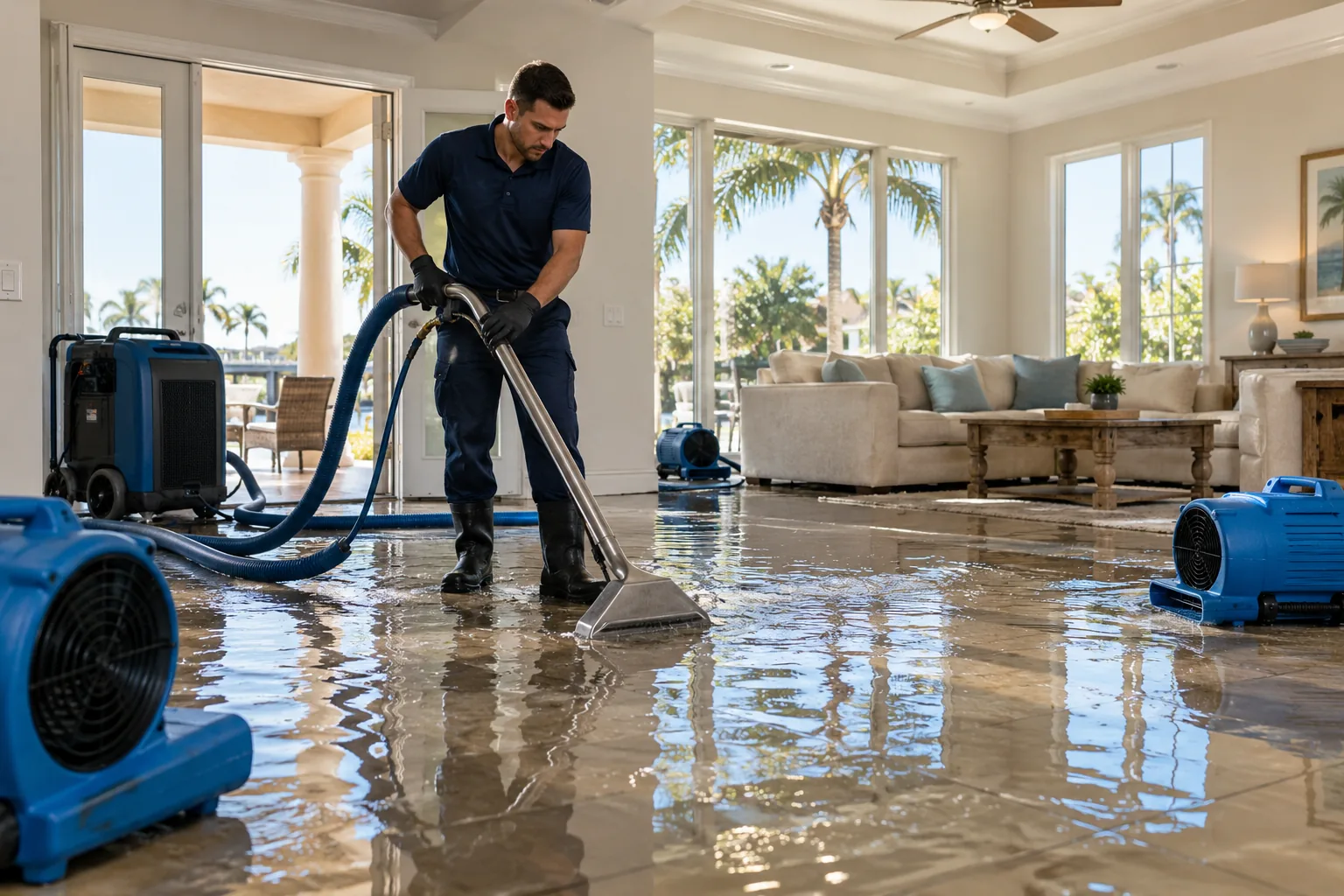
Whether it's water, fire, storm, or biohazard, professional restoration follows a structured process — and understanding that process is the difference between feeling helpless and being in control. This guide walks through every phase, what happens in each, what you should expect, and how to tell if it's being done right.
What are the phases of property damage restoration?
The short answer: Six phases: (1) Emergency response — make it safe and stop ongoing damage; (2) Assessment — inspect, measure, and scope the full extent; (3) Mitigation — emergency actions to prevent further damage; (4) Remediation — the actual restoration work (drying, cleaning, decontamination, demolition as needed); (5) Verification — confirm the work achieved its goals; (6) Reconstruction — rebuild what was removed.
The phases overlap in practice — mitigation starts during assessment, verification happens throughout — but the sequence matters because each phase depends on the last. Skipping assessment to rush into demolition is how scopes go wrong; skipping verification to rush into reconstruction is how problems get sealed inside walls. A professional crew moves fast through the phases, not past them.
Phase 1: Emergency response (hours)
The call comes in, and the priorities are safety and stabilization: Is the scene safe to enter? Is water still flowing? Is the building open to weather? Is there contamination? Emergency actions — water shutoff, board-up, roof tarping, standing water extraction — happen now, often before the full assessment. This phase is about stopping the bleeding. If you're in it right now, call (833) 606-6010 — describing what's happening gets you the right emergency response.
Phase 2: Assessment (hours to days)
The detective phase: moisture mapping with meters and thermal imaging, photo documentation, identification of all affected materials, categorization of water/contamination type, and a written scope of work. This is where the job is truly defined — a thorough assessment prevents both under-scoping (missing hidden damage) and over-scoping (unnecessary demolition). You should receive a clear explanation of what's damaged, what the plan is, and what it will take. Our assessment process details the methods.
Phase 3: Mitigation (days)
Emergency measures to prevent secondary damage: continued water extraction, initial demolition of unsalvageable materials, temporary protection of undamaged areas, and contents pack-out where needed. Mitigation is distinguished from remediation by urgency — it's the work that can't wait without the damage getting worse. Insurers expect and cover mitigation; it's also your policy duty as the owner.
Phase 4: Remediation (days to weeks)
The core work: structural drying with monitored equipment, controlled demolition, cleaning and decontamination, odor treatment, and contents restoration. This is the longest phase and the one most visible to you — equipment running, crews working, daily progress. Expect regular updates; a good contractor tells you what's happening and what's next without being asked.
Phase 5: Verification (ongoing, formal at end)
Proof the work succeeded: moisture readings at documented dry standards, visual inspection, odor checks, and where applicable, third-party clearance testing (mold) or sanitation verification. Verification is what separates "we're done" from "it's actually done." Ask for the documentation — moisture logs, photos, reports. It's yours.
Phase 6: Reconstruction (weeks)
Rebuilding what was removed: drywall, flooring, paint, trim, fixtures. This is construction, not emergency work, and it's often handled as a separate phase (sometimes by a different crew). The handoff matters: reconstruction should only begin after verification is complete and documented. See our restoration vs. reconstruction guide for how these relate.
How long does the whole restoration process take?
The short answer: Emergency response: hours. Assessment and mitigation: 1–5 days. Remediation: 1–4 weeks for typical residential jobs. Reconstruction: 2–8 weeks. Total: roughly 1–4 months for a standard water or fire job; major events (hurricanes, widespread flooding) run longer due to scope and contractor availability.
The timeline killer is almost never the work itself — it's the gaps between phases: waiting for adjuster approval, waiting for materials, waiting for the next trade. What compresses timelines: thorough documentation (fewer claim disputes), decisive scoping (fewer change orders), and a contractor who manages the sequence proactively. When getting estimates, ask not just "how long" but "what could delay it, and how do you handle that?" The quality of the answer predicts the quality of the timeline.
What should I expect as the property owner during restoration?
The short answer: Expect: a clear written scope before work begins, daily or regular progress updates, equipment noise during drying (it's temporary), some disruption to your routine, all major decisions explained before they're made, and complete documentation at the end. You should never wonder what's happening in your own property.
Your responsibilities: provide access, make timely decisions when asked (material selections, scope approvals), keep the claim file organized, communicate with your insurer, and pay attention to the verification documentation. What you should not have to do: project-manage the contractor, chase them for updates, or discover phases happening you didn't authorize. The relationship works best as a partnership — you're the decision-maker, they're the experts executing. Our why choose us page describes the communication standards we hold ourselves to.
How do I know if restoration is being done properly?
The short answer: Look for: written scope and documentation from the start, moisture readings (not guesses), containment where contamination is involved, proper PPE on workers, permits where required, and verification data at the end. Red flags: no assessment before demolition, no moisture logs, pressure to sign over insurance rights, demands for large cash deposits, and unwillingness to explain the plan.
Trust the process indicators, not just the personalities. A friendly contractor without moisture meters is still guessing. The single most revealing request: "Can I see the moisture readings and the drying log?" Professionals produce them proudly; improvisers deflect. Same with containment on mold/biohazard/sewage jobs — its absence is disqualifying, as our containment guide explains. And for the financial side, our cost guide helps you sanity-check estimates.
Dealing with this right now?
You don't have to figure out the next step alone. Call and describe the situation — what happened, where, and whether the area is secured — and you'll get a straight answer about what to do next. All inquiries are handled discreetly.
Call (833) 606-6010 Request help online
emergency line answered with discretion. If there's an active life-safety danger, call 911 first. Email: help@skyfoldrestorationfl.com
Frequently asked questions
Do I need to leave my home during restoration?
Depends on the scope. Drying and minor remediation: usually you can stay (it's noisy but safe). Major demolition, sewage, extensive mold, or structural work: often better to relocate temporarily. Your contractor should give you an honest recommendation, not just the convenient one. Check your policy's additional living expenses coverage.
Can I hire different companies for mitigation and reconstruction?
Yes — it's common. Mitigation specialists handle the emergency and remediation phases; general contractors handle rebuild. What matters is the handoff: reconstruction shouldn't start until remediation is verified complete, and the reconstruction scope should match what was actually removed.
What if I disagree with the contractor's scope?
Ask for the reasoning and the evidence (moisture readings, photos, test results). Get a second opinion if needed — reputable contractors welcome scrutiny of their scope. Never authorize work you don't understand; and never let disagreement stall emergency mitigation, which is time-critical regardless.
Who handles the insurance claim — me or the contractor?
You own the claim; the contractor supports it with documentation. Be cautious of contractors who want to fully take over your claim or ask you to sign assignment of benefits — understand what you're signing. Good documentation from the contractor plus your own claim file is the healthy model.
What permits are needed for restoration in Florida?
Emergency mitigation typically doesn't need permits; reconstruction often does (electrical, plumbing, structural, roofing). Requirements vary by municipality. Your contractor should handle permitting — verify this during hiring, not after work starts.
How do I prepare for the reconstruction phase?
Select materials and finishes early (delays here stall everything), confirm the scope matches the insurance settlement, get the timeline in writing, and plan for the disruption (dust, noise, workers present). A clear selections list before demolition ends keeps reconstruction moving.