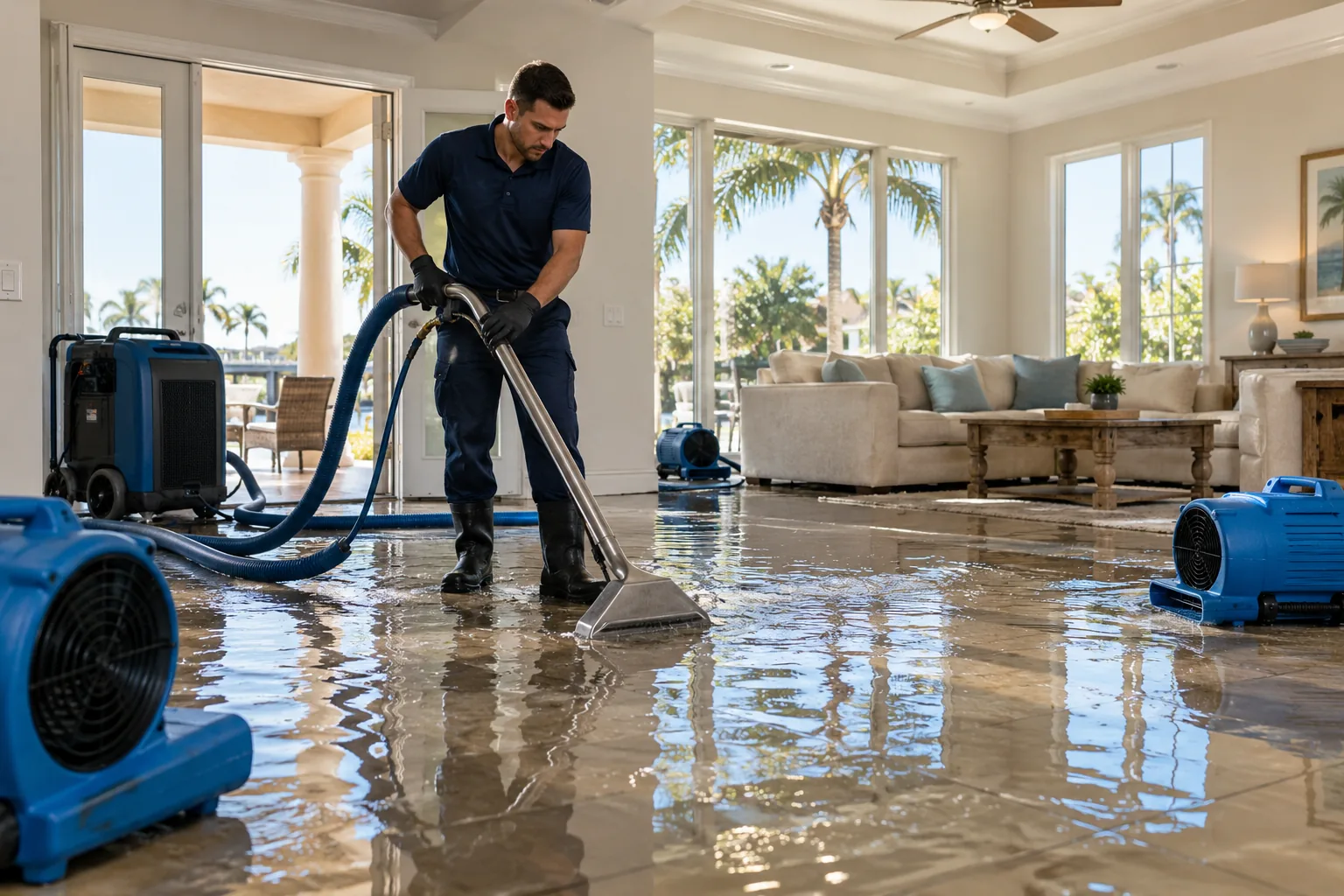
Flood cleanup isn't just a bigger version of mopping up a leak. Floodwater is contaminated, it gets into everything, and the standard playbook — extract, dry, repair — has extra steps that can't be skipped. Whether it's storm surge, overflowing canals, or flash flooding, here's the order of operations that actually works.
Is floodwater dangerous to touch?
The short answer: Yes — treat all floodwater as contaminated. It routinely carries sewage, fuel, pesticides, bacteria, and sharp debris, even when it looks like ordinary rainwater. Wear waterproof boots, gloves, and eye protection; keep children and pets away; and don't wade through it if you have open cuts.
This is the single most important mindset shift from a clean-water leak. A burst pipe is Category 1 water; floodwater is Category 3 — grossly contaminated — by definition, because it has contacted the ground, streets, and potentially septic and sewer systems. Everything porous that floodwater touches (drywall, insulation, carpet, upholstered furniture, mattresses) is generally removed rather than cleaned. Skin contact warrants thorough washing; ingestion or contact with eyes/mouth warrants medical attention. Don't let the "it's just rain" appearance fool you.
What are the steps of flood cleanup, in order?
The short answer: Safety check and power off → document everything → remove standing water → remove mud and debris → tear out unsalvageable porous materials → clean and sanitize remaining surfaces → dry the structure with professional equipment → verify dryness → rebuild.
Step 1: Make it safe to enter
Don't walk into a flooded building on assumption. Confirm the power is off at the main breaker (or have the utility disconnect it), check for structural damage — shifted foundations, cracked walls, sagging floors — and watch for gas leaks. If the building shifted or you smell gas, stay out and call professionals. Floodwater also displaces wildlife in Florida; snakes and alligators in floodwater are not urban legends.
Step 2: Document before you touch anything
Photograph water lines on walls (put a ruler or tape measure in the shot), damaged belongings where they sit, and the exterior including debris lines. Shoot video walkthroughs narrating each room. This evidence disappears the moment cleanup starts, and flood claims — whether through the NFIP or private insurance — depend on it heavily. Our storm damage documentation guide has a full checklist.
Step 3: Get the water out
Pump or extract standing water, working from the lowest point. If the ground outside is still saturated, pumping too fast can cause structural issues from hydrostatic pressure — in severe cases, pros pump in stages. Remove mud and silt next: shovel it out while it's still wet, because dried mud is far harder to remove and traps contamination against surfaces.
Step 4: Remove what can't be saved
Floodwater-soaked drywall (typically cut at least 12–24 inches above the water line, often 4 feet for efficiency), insulation, carpet and pad, and upholstered items go. This "flood cut" is standard because wicking pulls contamination well above the visible water line. Trying to save flood-soaked porous materials is how buildings develop permanent odor and mold problems.
Step 5: Clean, sanitize, then dry
Remaining hard surfaces get cleaned and disinfected with appropriate biocides. Only then does structural drying begin — drying before decontamination just preserves the contamination. Professional flood restoration uses the same moisture-meter verification as any water job, but the timeline is longer because saturation is deeper and more widespread.
How is flood cleanup different from regular water damage cleanup?
The short answer: Three big differences: contamination level (floodwater is Category 3, requiring removal rather than drying of porous materials), scale (whole-building saturation vs. localized leaks), and the mud factor (silt removal is a labor-intensive step that doesn't exist in clean-water jobs).
The practical consequence: flood jobs involve more demolition, more disposal, longer drying, and almost always an insurance claim — which means documentation discipline matters more. It's also why DIY flood cleanup so often goes wrong: homeowners try to dry what should be removed, skip sanitization, and end up with a building that looks restored but smells wrong and grows mold inside the walls within months.
Will insurance cover flood damage in Florida?
The short answer: Standard homeowners insurance does not cover flooding — you need separate flood insurance (NFIP or private). This is the most expensive misunderstanding in Florida property ownership. If you have flood insurance, document thoroughly and file immediately; if you don't, you're paying out of pocket, and our financing guide covers options for that situation.
Key NFIP realities: there's typically a 30-day waiting period before new policies take effect (you can't buy it during a hurricane warning), coverage limits are capped ($250K building / $100K contents for residential), and basements have limited coverage. If you're in a high-risk flood zone with a mortgage, your lender already requires it. If you're not in a high-risk zone, consider it anyway — a huge share of Florida flood claims come from outside mapped high-risk areas.
Dealing with this right now?
You don't have to figure out the next step alone. Call and describe what you see — where the damage is, how long it's been there, and whether it's still spreading — and you'll get a straight answer about what to do next.
Call (833) 606-6010 Request help online
emergency line. If there's an active life-safety danger, call 911 first. Email: help@skyfoldrestorationfl.com
Frequently asked questions
How long does flood cleanup take?
Extraction and mud removal: days. Demolition of unsalvageable materials: days to a week. Structural drying: 1–3 weeks for severe saturation. Full rebuild: weeks to months. A typical single-family flood job runs 2–6 months from water to fully restored, depending on scope and contractor availability after widespread events.
Can I stay in my home during flood cleanup?
Usually not until sanitization is complete and power/HVAC are safely restored. Category 3 contamination, lack of utilities, and active demolition make flooded homes uninhabitable during early phases. Check with your insurer about additional living expenses coverage.
What should I throw away after a flood?
Porous items that contacted floodwater: mattresses, pillows, upholstered furniture, carpet and pad, stuffed toys, paper/cardboard, and most clothing that can't be hot-water laundered with disinfectant. Hard goods (dishes, hard toys) can be cleaned and sanitized. When in doubt about food: throw it out — flood-exposed food is never safe.
Do I need a permit for flood repairs?
In Florida, generally yes for anything beyond cosmetic work — and flood repairs often trigger the "50% rule": if damage exceeds 50% of the structure's market value, the building must be brought up to current flood code (which can mean elevation). Check with your local building department before rebuilding.
How do I prevent mold after a flood?
Speed: remove wet porous materials fast, sanitize, and get professional drying running within days. In Florida's climate, a flooded home without active drying will develop mold within a week — there is no "wait and see" option. Antimicrobial treatments help but don't substitute for removing wet material and drying the structure.
What's the 50% rule in Florida?
If flood damage repairs would cost 50% or more of the building's market value (excluding land), local floodplain regulations typically require bringing the entire structure into compliance with current codes — often meaning elevating the home. This can dramatically change the economics of rebuilding vs. other options. Your local floodplain administrator can explain how it's calculated in your jurisdiction.