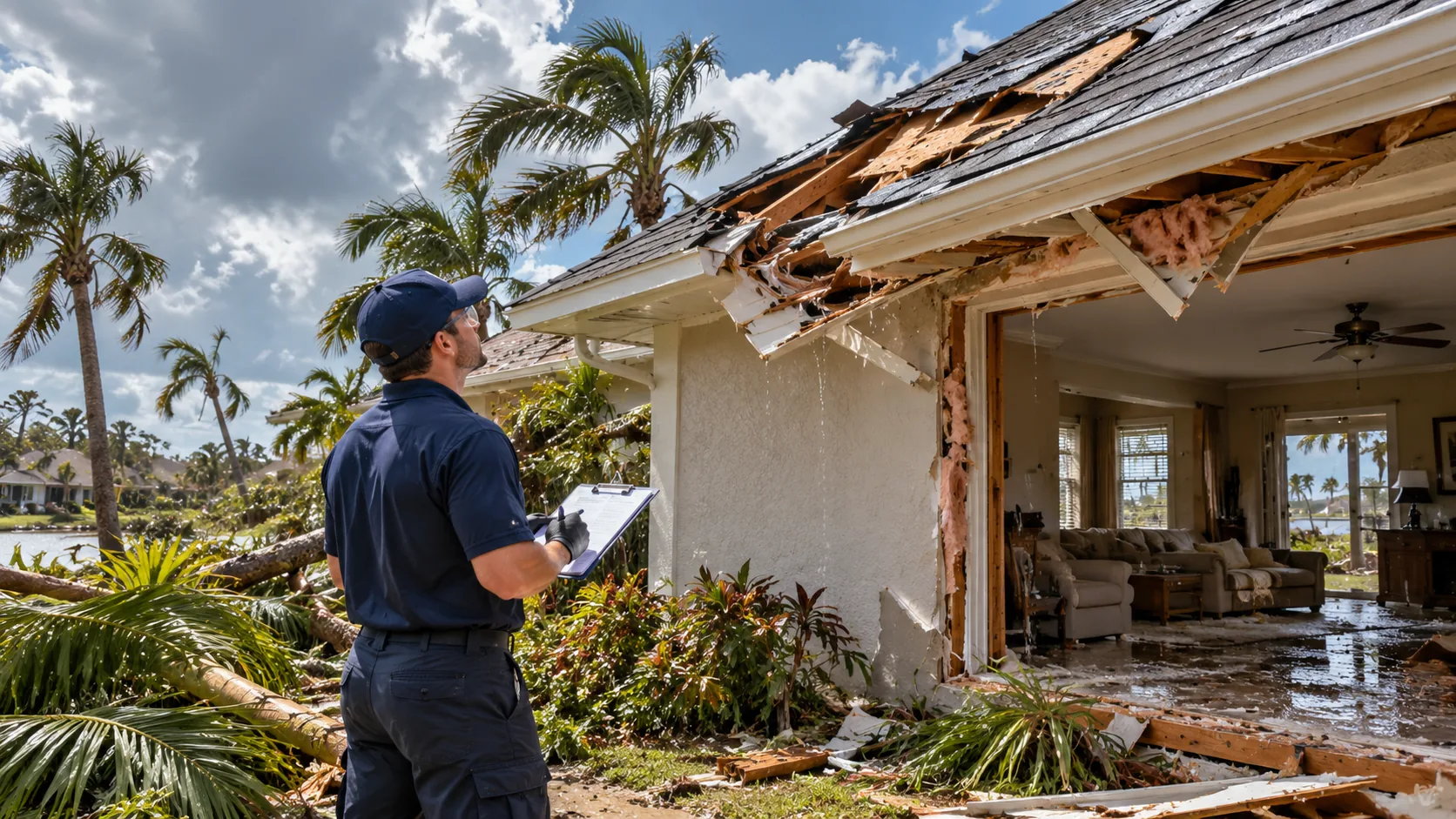
Roof Tarping in Florida
Temporary roof protection after wind, storm or impact damage to reduce additional intrusion.
Coverage entries describe the service-area directory and do not represent a physical office at every listed ZIP.
Common situations connected to roof tarping
This page explains the service in plain language, connects it to related restoration work and provides a path to the city-level service pages where that coverage exists.
Missing Shingles
The response should follow the source, material condition, access and safety considerations.
Punctures
The response should follow the source, material condition, access and safety considerations.
Wind Damage
The response should follow the source, material condition, access and safety considerations.
Fallen Limb Impact
The response should follow the source, material condition, access and safety considerations.
Roof Openings
The response should follow the source, material condition, access and safety considerations.
Rain Exposure
The response should follow the source, material condition, access and safety considerations.

Use the supporting service to solve the actual problem, not just the visible symptom.
Temporary roof protection after wind, storm or impact damage to reduce additional intrusion. A useful work plan considers what caused the condition, which materials are affected, what needs to be protected, and what documentation is needed before the next stage.
A practical roof tarping workflow
Initial call and scope review
The work scope should be based on verified conditions and the requirements of the property.
Safety and access assessment
The work scope should be based on verified conditions and the requirements of the property.
Service-specific work
The work scope should be based on verified conditions and the requirements of the property.
Documentation and progress checks
The work scope should be based on verified conditions and the requirements of the property.
Related restoration review
The work scope should be based on verified conditions and the requirements of the property.
Next-step planning
The work scope should be based on verified conditions and the requirements of the property.
How roof tarping can connect to broader restoration
Water Damage Restoration
Water extraction, cleanup, moisture assessment, structural drying and restoration planning for homes and businesses.
Fire Damage Restoration
Fire, smoke and soot cleanup with property stabilization, contents coordination, odor control and restoration planning.
Storm Damage Restoration
Storm and hurricane damage response for roof intrusion, wind damage, flooding, debris and temporary property protection.
Biohazard Cleanup
Professional biohazard cleanup, containment, decontamination and sanitation for sensitive property situations.
What Affects Roof Tarping Cost in Florida?
Professional roof tarping in Florida typically costs $300 to $1,500 based on tarp coverage area, roof pitch, and access. Planned tarping (scheduled after an inspection finds damage) costs less than 2 a.m. emergency calls — but both beat the cost of the next rainstorm on an open roof.
Coverage area
Partial-slope tarping vs. full-slope coverage after major wind loss — tarp size and crew time scale together.
Pitch, height & access
Steep pitches, tile roofs (fragile underfoot), and multi-story homes need more safety setup and labor.
Underlying damage
Tarping over sound decking is fast. Exposed rafters, missing decking sections, or structural concerns add assessment and reinforcement time.
Duration needed
Standard tarps last 60–90 days in Florida UV. Longer-term needs may call for upgraded materials or re-tarping — factor it into the rebuild timeline.
How Roof Tarping Works, Step by Step
Proper tarping protects the interior for weeks: full coverage past the damage, anchored to structure, sealed against wind.
1. Inspection
The full roof is checked — damage is often wider than the visible breach, especially with wind-lifted tiles and shingles.
2. Debris clearing
Limbs, loose tiles, and debris are removed so the tarp lies flat and seals. Sharp debris under a tarp becomes a new leak.
3. Tarp installation
Reinforced tarps extend past all damage edges, fastened with battens into structural members — the method that survives Florida wind and rain.
4. Drainage planning
Tarps are tensioned to shed water, not pond it. Ponding collapses tarps into the breach — slope and runoff direction are planned.
5. Monitoring plan
The tarp is checked after subsequent storms. Permanent repair is scheduled — tarping buys time, it doesn’t stop the clock.
Roof Tarping in Florida: Tile, Wind & UV Realities
Florida’s tile roofs complicate tarping — tiles crack underfoot, so crews work from battens and ridge lines, and fastening must avoid shattering surrounding tiles. Shingle roofs are simpler but wind-lifted shingles often hide wider damage than the obvious hole. Either way, Florida UV degrades tarps fast: inspect monthly and plan the permanent fix within 60–90 days.
Insurance-wise, tarping is mitigation — document it. Photos of the damage before tarping, the installed tarp, and the invoice all support the claim. If a named storm caused the damage, the hurricane deductible applies to the overall claim, but the tarping itself is reimbursable mitigation.
Emergency
Active roof tarping in Florida? Call (833) 606-6010 now — fast response limits secondary damage.
Roof Tarping questions
When is roof tarping needed?
The answer depends on the loss, affected materials and current site conditions. A property-specific assessment is more reliable than a one-size-fits-all checklist.
What does roof tarping involve?
Temporary roof protection after wind, storm or impact damage to reduce additional intrusion. The exact scope should follow the actual property conditions.
How does roof tarping connect to other restoration work?
Supporting services are often connected to a broader loss. For example, water extraction may lead into structural drying, while storm damage may lead into tarping and interior water mitigation.
How long can a roof tarp stay on?
60–90 days for standard installations in Florida’s UV. Plan the permanent repair inside that window — a deteriorating tarp is worse than none because it hides new leaks.
Will a tarp damage my tile roof?
Properly installed, no — crews avoid walking tiles and fasten to structural members. Improper DIY tarping (nails through tiles, dragging tarps) causes real damage.
Is roof tarping covered by insurance?
Yes, as emergency mitigation. It’s part of the claim — keep the invoice and before/after photos.
What’s the difference between emergency tarping and scheduled tarping?
Emergency tarping is prompt response (often nights/weekends, premium rates) to stop active intrusion. Scheduled tarping follows an inspection finding — same quality installation, standard rates, better planning.
Related Restoration Services
Damage rarely involves just one trade. These services commonly connect to roof tarping projects.