Washing Machine Water Damage in Florida
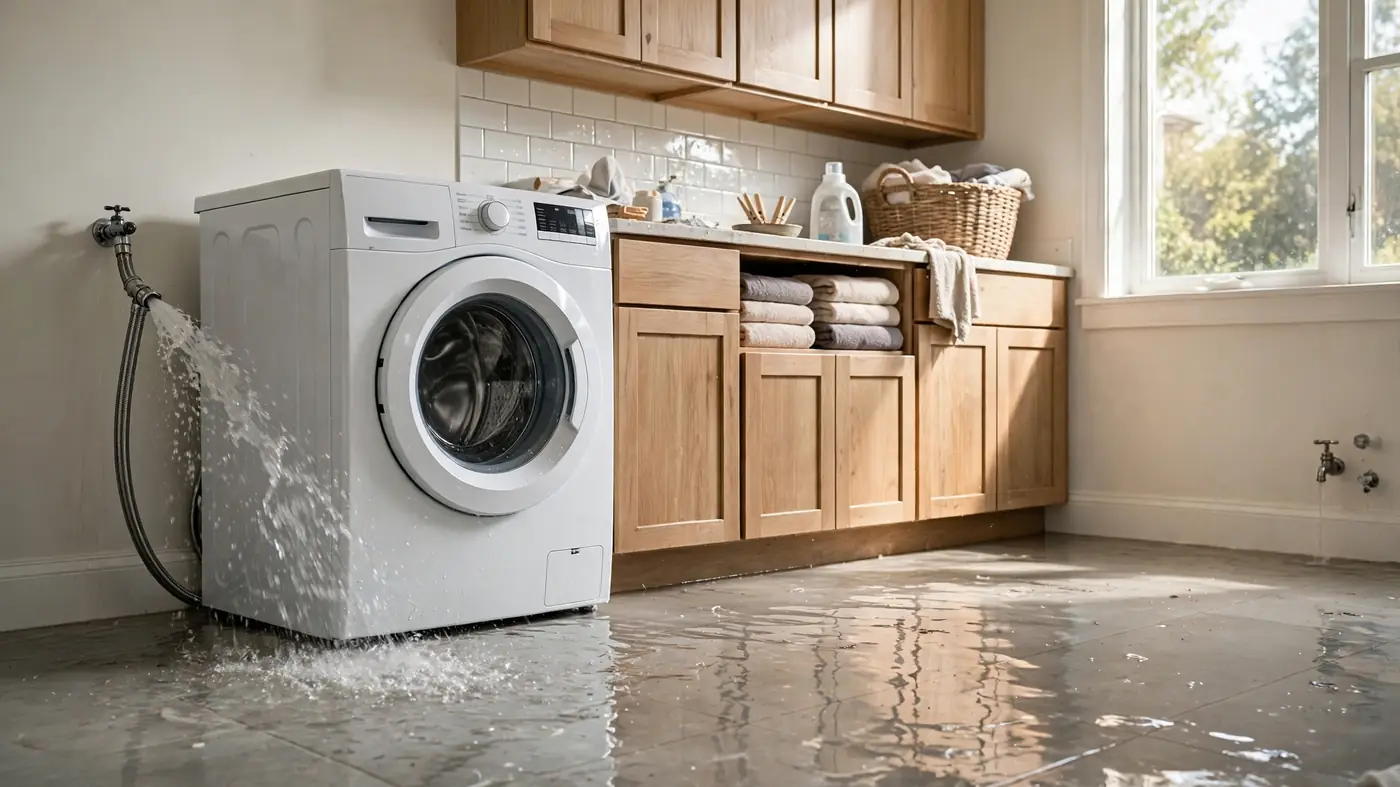
Washing machine water damage in Florida is one of the most common and most preventable household floods. A burst supply hose can release hundreds of gallons while you are at work, and a failed drain pump can soak laundry rooms, adjacent rooms, and the floors below. This guide covers why washers flood, what to do, and how to prevent it.
Fast Answer
If your washing machine is flooding, turn off both water supply valves behind the machine, unplug it only if you can do so without standing in water, and turn off the breaker if water is near outlets. Mop up standing water, move the machine if safe to check the hoses, and call a plumber or appliance technician for the machine. For soaked flooring, walls, or large volumes, call for professional water extraction and drying.
Why Washing Machines Flood Homes
A washing machine is two pressurized water lines and a big drain, all of which can fail.
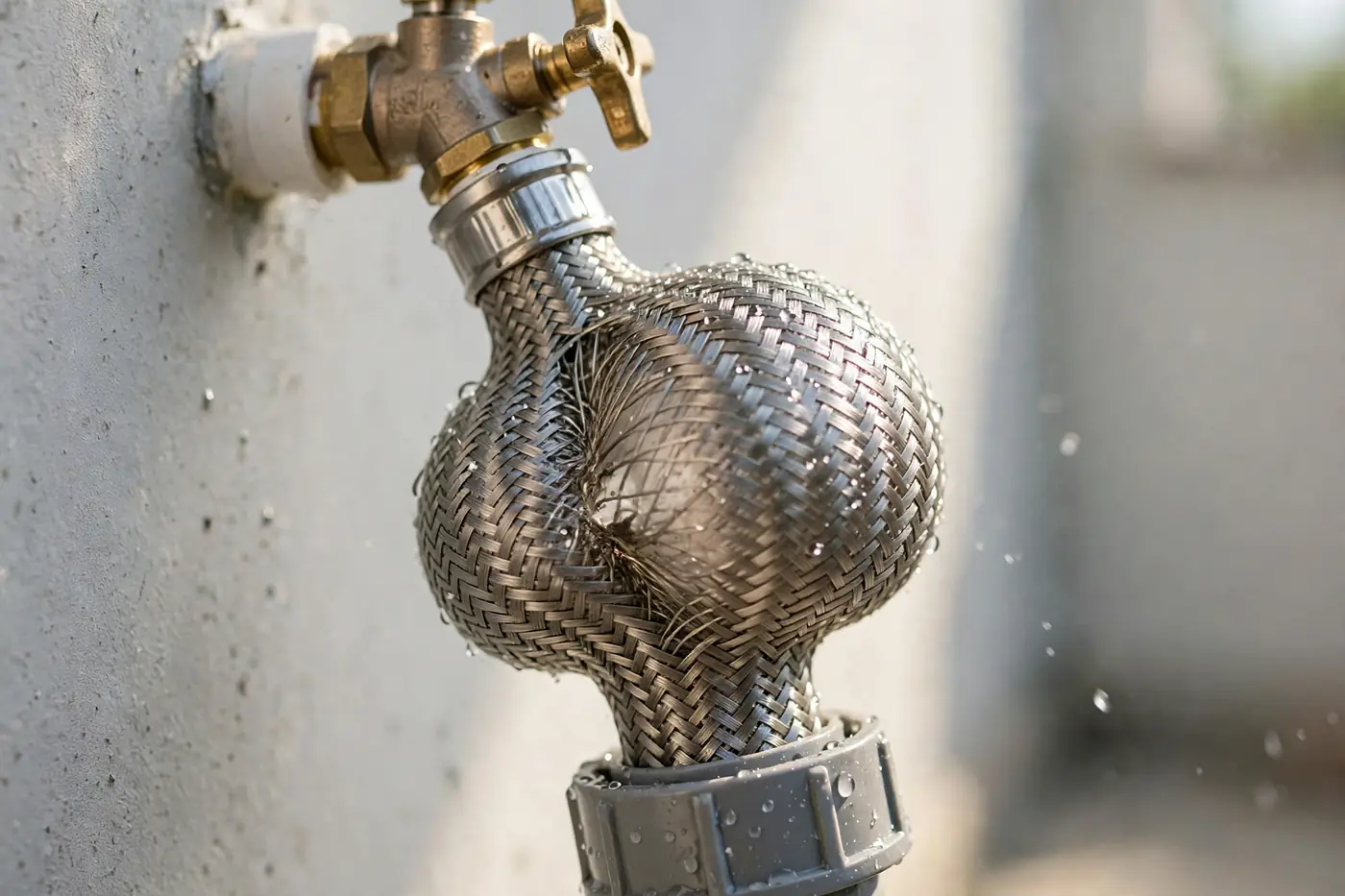
The number one cause is a burst or leaking supply hose. Standard rubber supply hoses deteriorate with age, heat, and constant pressure, developing weak spots that eventually rupture. When a supply hose bursts, it releases full household water pressure, which means a laundry room can take on inches of water in well under an hour. This is the classic while-you-were-at-work flood. Braided stainless steel hoses resist bursting far better, which is why every major guidance source recommends them, yet many Florida homes still run original rubber hoses.
Drain problems cause the second category of floods. If the standpipe or drain line is partially clogged with lint, detergent residue, or debris, the washer's pump can push water out faster than the drain accepts it, overflowing the standpipe onto the floor. An improperly installed drain hose, pushed too far down the standpipe or lacking an air gap, can siphon or back up. In Florida homes where laundry rooms sit on upper floors, a drain overflow runs down through ceilings below, multiplying the damage.
Internal machine failures cause the third category: a cracked tub, failed water inlet valve that sticks open, broken drain pump, or door seal failure on front-loaders. Overloading the machine stresses these components and the suspension, leading to the violent shaking that can disconnect hoses or crack fittings. Hard water, common in parts of Florida, accelerates valve and seal wear.
Location amplifies consequences. Florida laundry rooms are often on second floors, in garages, or in utility closets adjacent to living spaces. An upstairs washer flood soaks the ceiling below, turning a laundry room problem into a two-story water damage restoration project. The Central Florida and Tampa Bay suburbs, full of two-story family homes, see this pattern regularly.
Warning Signs Before a Washer Floods
Washers usually hint at trouble before they let go.
- Old rubber supply hoses. If your hoses are plain black rubber and more than five years old, they are living on borrowed time. Check for bulges, cracks, or brittleness.
- Water on the laundry room floor after cycles. Even small puddles indicate a hose seep, pump issue, or drain problem that will worsen.
- The machine walks or shakes violently. Excessive vibration can disconnect hoses, crack fittings, and damage internal components. Level the machine and avoid overloading.
- Slow draining or gurgling standpipe. A drain that cannot keep up with the pump cycle will eventually overflow. Lint and residue build up gradually.
- Musty smell in the laundry area. Chronic dampness from small leaks feeds mold growth behind and under the machine. Pull the washer out periodically and look.
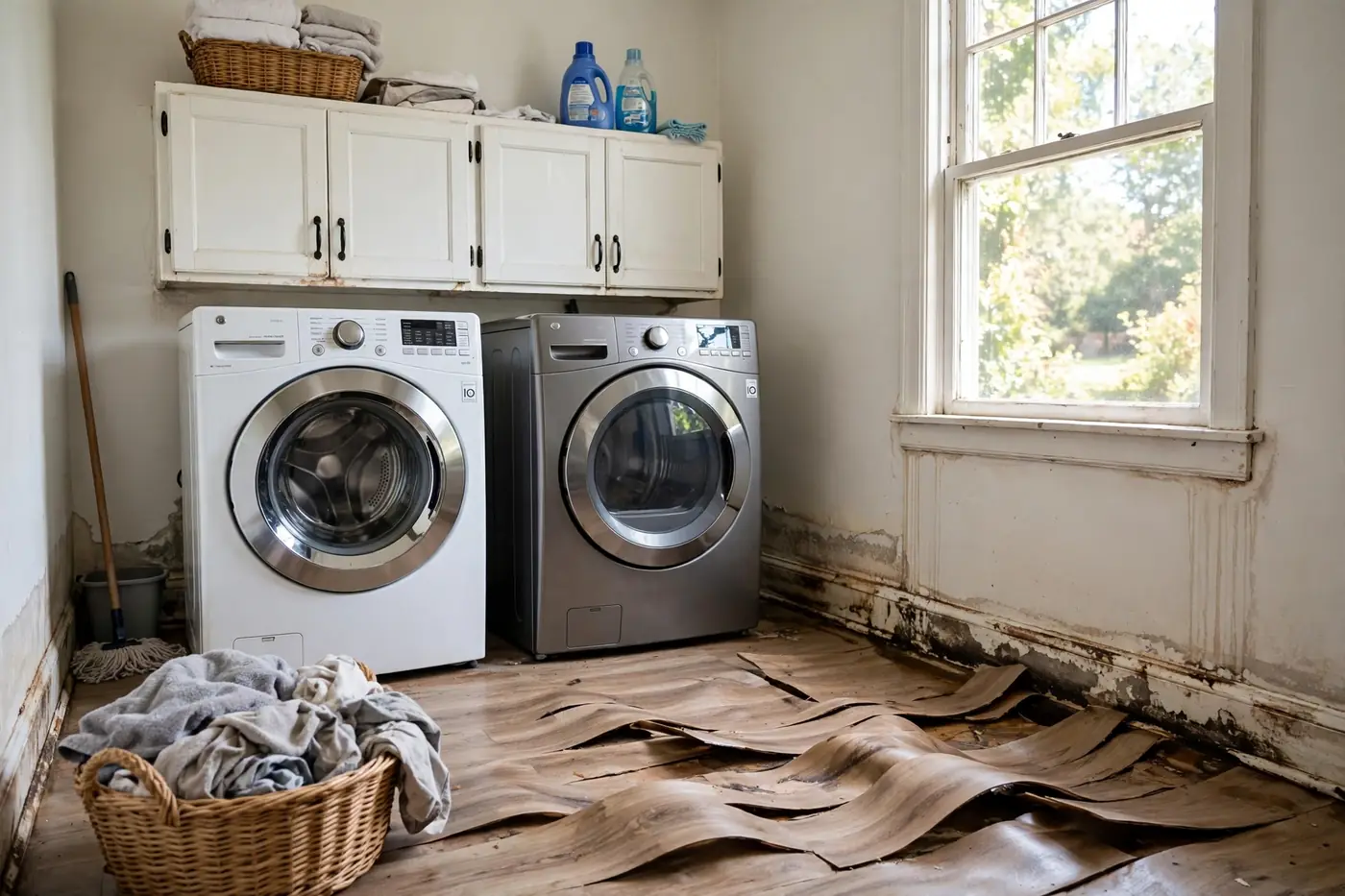
- Discolored or soft flooring around the machine. Stained grout, warped baseboards, or soft spots near the washer indicate ongoing seepage. Compare with signs of water damage.
What to Do When the Washer Floods
Stop the water, protect yourself from electricity, then deal with the water.
- Turn off the water supply valves. Both hot and cold valves sit behind the machine. Turn them clockwise. If you cannot reach them safely, shut off the home's main water valve.
- Address electricity carefully. Unplug the washer only if you can do so without standing in water. If water has reached outlets or the breaker panel area, turn off the breaker first and stay out of standing water.
- Stop the cycle and contain water. If the machine is still running, cancel the cycle. Mop up standing water, lay towels along the flow path, and move items out of the wet area.
- Check the hoses. Once water is off and the area is safe, pull the machine forward carefully and inspect both supply hoses and the drain hose for bursts, disconnections, or cracks.
- Call for the machine repair. A plumber or appliance technician fixes hoses, valves, pumps, and drain issues. Do not run the machine again until the cause is identified and fixed.
- Assess the water damage. Water under and behind the washer, into adjacent rooms, or through the floor below needs more than mopping. Professional water extraction removes trapped water, and structural drying with moisture meters ensures subfloors and wall cavities are actually dry.
- Document for insurance. Photograph the failed hose or component, all wet areas, and damaged belongings before cleanup. Keep the failed part if possible. See insurance documentation for what to record.
Supply Hoses: The Five-Minute Upgrade That Prevents Floods
The humble supply hose is the highest-leverage flood prevention item in the laundry room.
| Hose type | Burst resistance | Recommendation |
|---|---|---|
| Plain rubber | Low, degrades with age and heat | Replace immediately if installed |
| Reinforced rubber | Moderate | Acceptable short term, inspect yearly |
| Braided stainless steel | High | Best choice, replace every 5 to 7 years |
| Auto-shutoff hoses | High, plus flow-sensing shutoff | Premium option for upstairs laundry rooms |
When replacing hoses, also replace the rubber washers, hand-tighten plus a quarter turn with pliers, and leave a slight slack loop rather than stretching hoses taut. Check connections yearly for corrosion and seepage. The few dollars and minutes this costs are trivial compared to a burst-hose flood.
Preventing Washing Machine Floods
A short maintenance routine prevents the most common laundry floods.
- Replace supply hoses every five to seven years. Use braided stainless steel. Mark the installation date on the hose with a marker so you remember.
- Turn off supply valves when traveling. If you leave home for more than a day or two, shut the washer valves. No pressure means no burst while you are away.
- Do not overload the machine. Overloading strains the suspension, hoses, and seals, and causes the violent shaking that breaks things.
- Clean the drain pump filter regularly. Front-loaders have an accessible pump filter that traps lint and objects. A clogged filter strains the pump and can cause backups.
- Consider a drain pan and water alarm. A washing machine drain pan with a water sensor alarm alerts you to leaks early, especially valuable for upstairs laundry rooms. Some pans can be plumbed to a drain.
- Leave space and check behind the machine yearly. Pull the washer out annually, inspect hoses and connections, check the floor and wall for moisture, and verify the drain hose is properly seated.
- Fix drainage issues promptly. A standpipe that gurgles or overflows needs a plumber's attention before it becomes a flood. See burst pipe water damage for related supply-line risks.
Common Questions
Age, heat, and constant water pressure degrade rubber hoses over time, creating weak spots that rupture suddenly. Poor installation, kinking, and excessive vibration accelerate failure. Braided stainless steel hoses resist bursting far better than plain rubber.
At normal household pressure, a burst supply hose can release several gallons per minute. An eight-hour workday absence can mean hundreds of gallons, easily flooding a laundry room and adjacent areas, or the floor below.
Yes. Shutting the hot and cold supply valves before any trip longer than a day or two eliminates burst-hose risk while you are away. It takes seconds and is one of the most effective flood prevention habits.
Sudden hose bursts are typically covered as accidental water damage, while gradual seepage from neglected maintenance may not be. Document the failure and damage thoroughly, and review your policy terms.
A shallow pan installed under the washer that catches leaks and directs water to a drain or triggers an alarm. It is especially valuable for upstairs laundry rooms, where it can prevent a washer leak from becoming a two-story water damage event.
Usually an unbalanced load, an unlevel machine, or worn suspension components. Beyond the noise, violent shaking can disconnect hoses and crack fittings, so address it promptly by leveling the machine and avoiding overloading.
Related Water Damage Help
Washer floods connect to: burst pipe water damage for supply-line failures, toilet overflow water damage for another fixture flood, and mold growth for damp laundry areas. For recovery, see water extraction, structural drying, and the emergency checklist.
Need Help With Washing Machine Water Damage?
Call now for water extraction, drying, and restoration anywhere in Florida.