
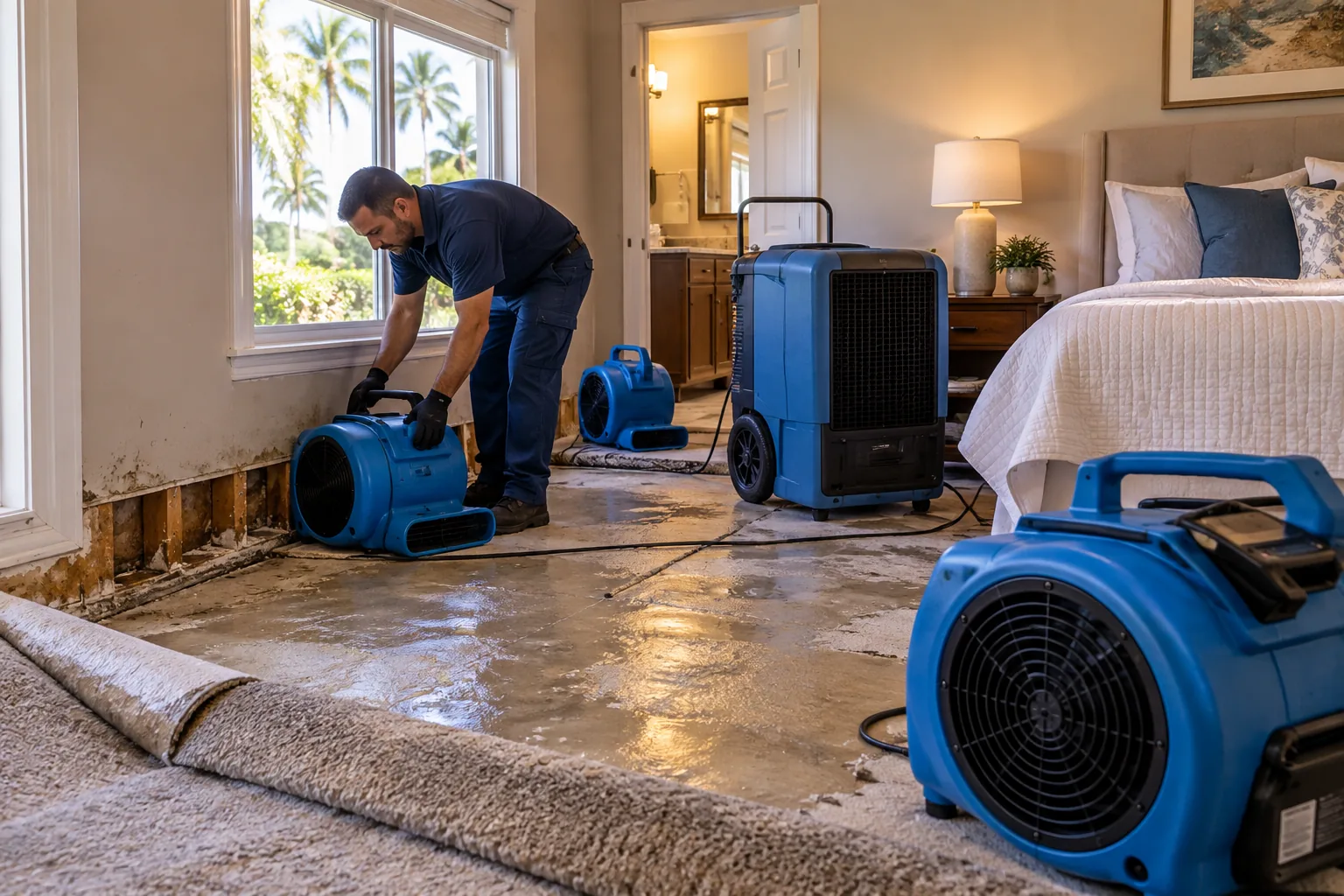
Extraction + drying
Standing water removal and structural drying are separate steps. Drying needs measured conditions, not guesswork.
Water losses can begin with a burst pipe, appliance leak, roof opening, HVAC condensate issue, sewage backup, flood or storm intrusion. Skyfold organizes the response around the actual source, moisture conditions, building materials and property type rather than treating every loss the same.
City, ZIP, damage type and whether water is still active help route the request.
A useful restoration page should answer the practical questions before someone ever schedules a visit: what to do now, what the process looks like, what can stay hidden and how to find the right city/service page.
Water damage restoration is broader than removing visible water. The work may involve source-control planning, extraction, moisture detection, structural drying, cleaning, sanitation, contents handling and repair decisions.
Different water sources can create different conditions. Clean supply water, appliance leaks, storm-driven intrusion and sewage backups do not carry the same cleanup considerations. Building materials can also respond differently: wood flooring, drywall, insulation, cabinets and porous contents may hold moisture after the surface appears dry.
Standing water removal and structural drying are separate steps. Drying needs measured conditions, not guesswork.
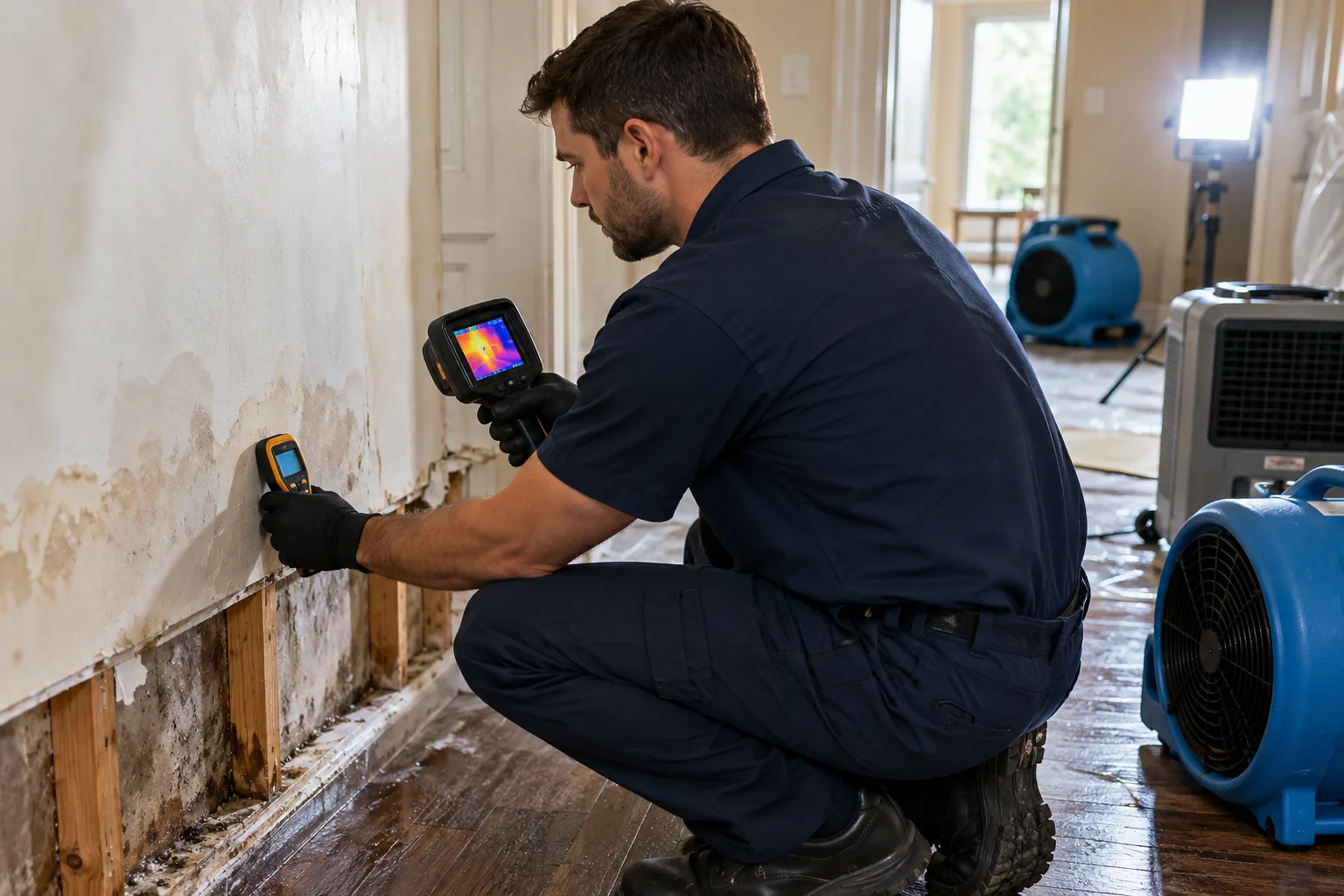
Photos, source information and moisture readings help explain why the scope includes particular rooms or materials.
These supporting services connect the main water-damage page to specific search intent without creating disconnected or duplicate pages.
Remove standing water and reduce continued absorption where appropriate.
View service →Stabilize the affected area after the source is controlled.
View service →Dry walls, floors, ceilings and other affected materials with measured conditions guiding the plan.
View service →Assess and clean flood-related water intrusion with attention to contamination and building impact.
View service →Handle contaminated-water situations with controlled access, cleaning and sanitation.
View service →Address mold concerns that may follow unresolved moisture conditions.
View service →The 255 supplied water-damage city pages are connected here to make the hierarchy clear: Florida → region → city → water damage restoration.
High humidity, intense rain, tropical systems and a dense mix of condos, homes, rentals and commercial buildings can create different water-loss paths from property to property.
Explore South Florida →Inland and east-central Florida properties can see plumbing failures, HVAC moisture, summer thunderstorms, roof intrusion and water losses that move through finished floors and wall cavities.
Explore Central Florida →Tampa Bay combines humid weather, heavy rain, coastal exposure and a broad mix of residential and commercial buildings, making moisture assessment important after visible water is removed.
Explore Tampa Bay →Southwest Florida properties can experience water losses from plumbing, appliances, roof intrusion, tropical weather and high-humidity conditions, with seasonal occupancy adding coordination needs.
Explore Southwest Florida →North and Northwest Florida includes Panhandle and Northeast communities where heavy rain, tropical systems, roof openings and plumbing incidents can affect homes and businesses.
Explore North & Northwest Florida →The Gulf Coast & Central West corridor is shown as an overlapping navigation path for west-coast communities; it may reference cities that also sit under neighboring regional hubs.
Explore Gulf Coast & Central West Florida →Polk and inland communities include lakeside, suburban, rural and commercial property types where water can spread beyond the room where the source was discovered.
Explore Polk & Inland Florida →High humidity, intense rain, tropical systems and a dense mix of condos, homes, rentals and commercial buildings can create different water-loss paths from property to property.
Inland and east-central Florida properties can see plumbing failures, HVAC moisture, summer thunderstorms, roof intrusion and water losses that move through finished floors and wall cavities.
Tampa Bay combines humid weather, heavy rain, coastal exposure and a broad mix of residential and commercial buildings, making moisture assessment important after visible water is removed.
Southwest Florida properties can experience water losses from plumbing, appliances, roof intrusion, tropical weather and high-humidity conditions, with seasonal occupancy adding coordination needs.
North and Northwest Florida includes Panhandle and Northeast communities where heavy rain, tropical systems, roof openings and plumbing incidents can affect homes and businesses.
The Gulf Coast & Central West corridor is shown as an overlapping navigation path for west-coast communities; it may reference cities that also sit under neighboring regional hubs.
Polk and inland communities include lakeside, suburban, rural and commercial property types where water can spread beyond the room where the source was discovered.
The right first steps reduce avoidable damage without putting people into unsafe conditions.
Competitor service architectures commonly separate stabilization, extraction, drying and rebuilding. This version keeps those stages connected so the page answers the full journey.
Share the property address, city, ZIP, source of water and immediate safety concerns.
Identify affected areas, materials and concealed moisture conditions.
Stop the cause where possible and remove standing water when appropriate.
Use controlled airflow and dehumidification based on the building and measured conditions.
Clean affected surfaces and coordinate salvageable contents when the condition calls for it.
Repeat moisture measurements and identify materials that need repair or reconstruction.
A water loss in a detached home is not managed exactly like a loss in a high-rise unit, hotel, office or multifamily building.
Shared walls can move water into neighboring units. Building managers may need access to multiple spaces. Vacation rentals may require fast coordination with owners, guests or property managers. Commercial sites may need a documented plan that considers business interruption and access. The service path should reflect the actual property.
Bedrooms, kitchens, bathrooms, living areas, flooring, ceilings and personal contents.
Shared walls, neighboring units, access coordination and association or manager communication.
Guest safety, owner communication, contents and rapid documentation.
Offices, retail, lodging and other occupied spaces with broader coordination needs.
Restoration documentation can support conversations with insurers, adjusters, owners, managers and contractors.
Capture rooms, affected materials, contents and the apparent source from a safe position before the condition changes.
Record when the issue was found, when the source was controlled and when mitigation or drying began.
Retain estimates, invoices, equipment notes and other records provided during the restoration process.
Scope can include emergency intake, source control review, water extraction, moisture assessment, structural drying, cleaning or sanitation, contents coordination and repair planning. The exact sequence depends on the loss.
Promptly, especially when water is still spreading, standing water is present, contamination is suspected or moisture has reached building materials. Safety comes first; do not enter areas with electrical, structural or contamination hazards.
Yes. The service architecture includes homes, condos, apartments, vacation rentals, offices and other commercial properties. Access, occupancy, contents and coordination needs can change the restoration scope.
Yes. Moisture can remain behind drywall, beneath flooring, inside cabinets or in other concealed assemblies. Moisture measurement helps determine whether the visible dry surface matches the condition of the building materials.
No. ZIP listings are service-area navigation data. A ZIP listing should not be interpreted as a physical office at that address or as a guaranteed response time.
Coverage depends on the policy, cause of loss, exclusions and claim circumstances. Keep photos, notes, receipts and restoration records and follow the instructions from your insurer or adjuster.
Stay safe, stop the source only when it is safe, keep people away from unsafe or contaminated areas, photograph visible damage from a safe position and avoid using household vacuums on large amounts of standing water.
The remaining moisture is assessed. Drying equipment may be positioned, environmental conditions monitored and readings repeated until the affected materials are sufficiently dry for the next stage of cleaning or repairs.
Give the property city, ZIP and water-loss details so the appropriate service path can be reviewed.