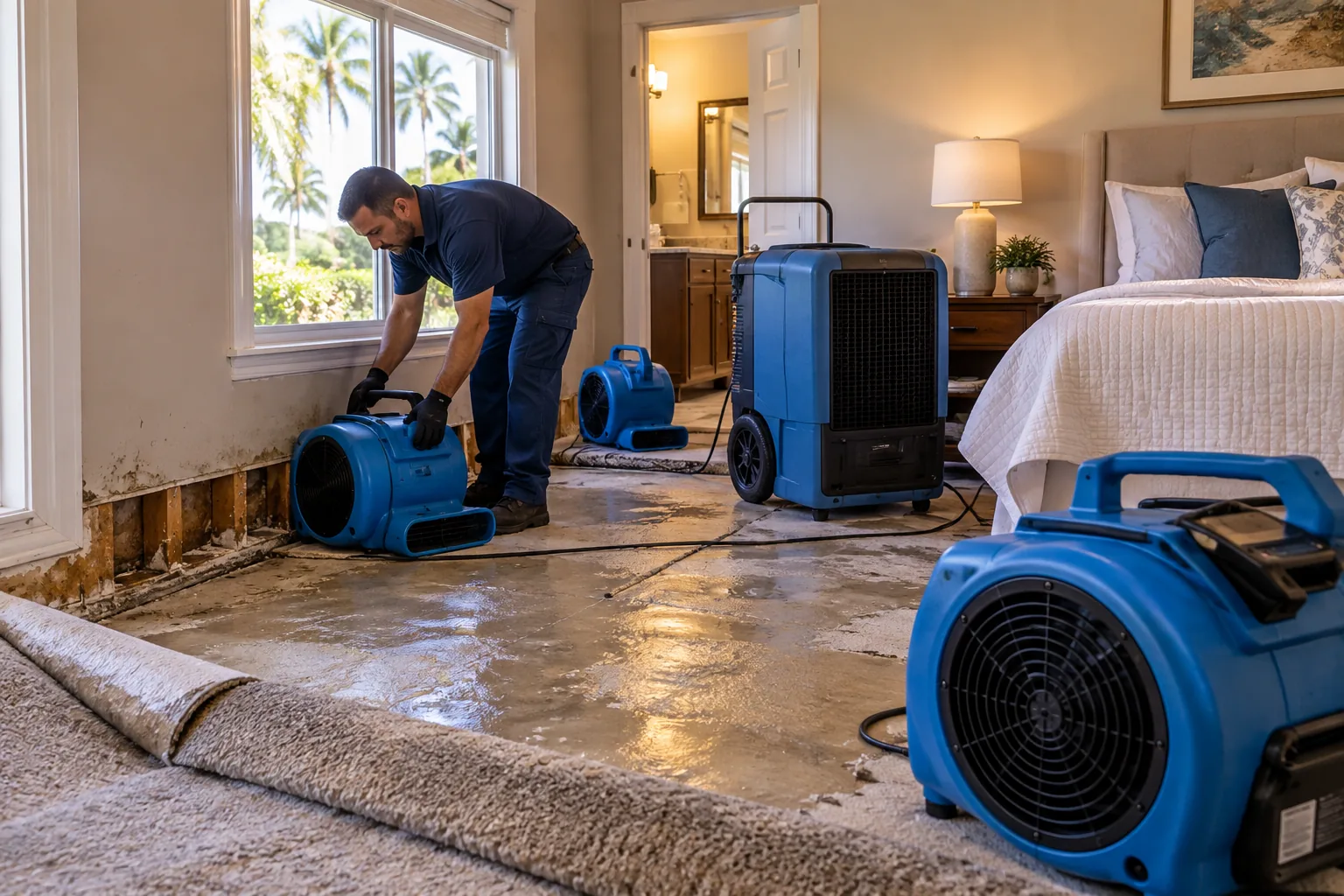
Measured drying
Drying should be guided by the building and moisture conditions rather than surface appearance alone.
Get from active water damage to the right next step with a clear path for emergency intake, water extraction, moisture assessment, structural drying, cleanup and restoration planning.
Different losses call for different combinations of stabilization, extraction, drying, cleanup, documentation and repair planning.
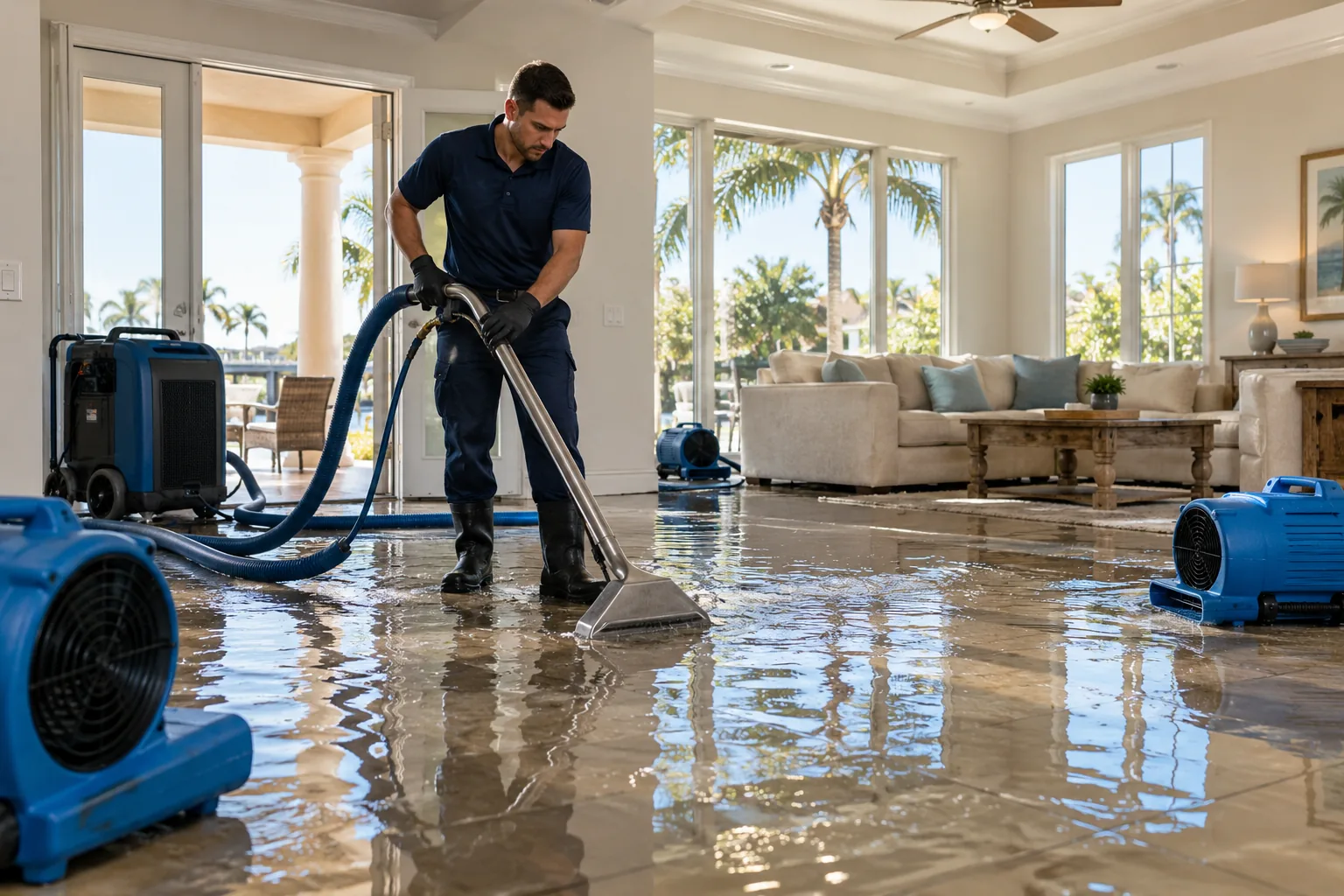
Extraction, moisture assessment, structural drying, cleanup and water-loss planning.
Explore water restoration →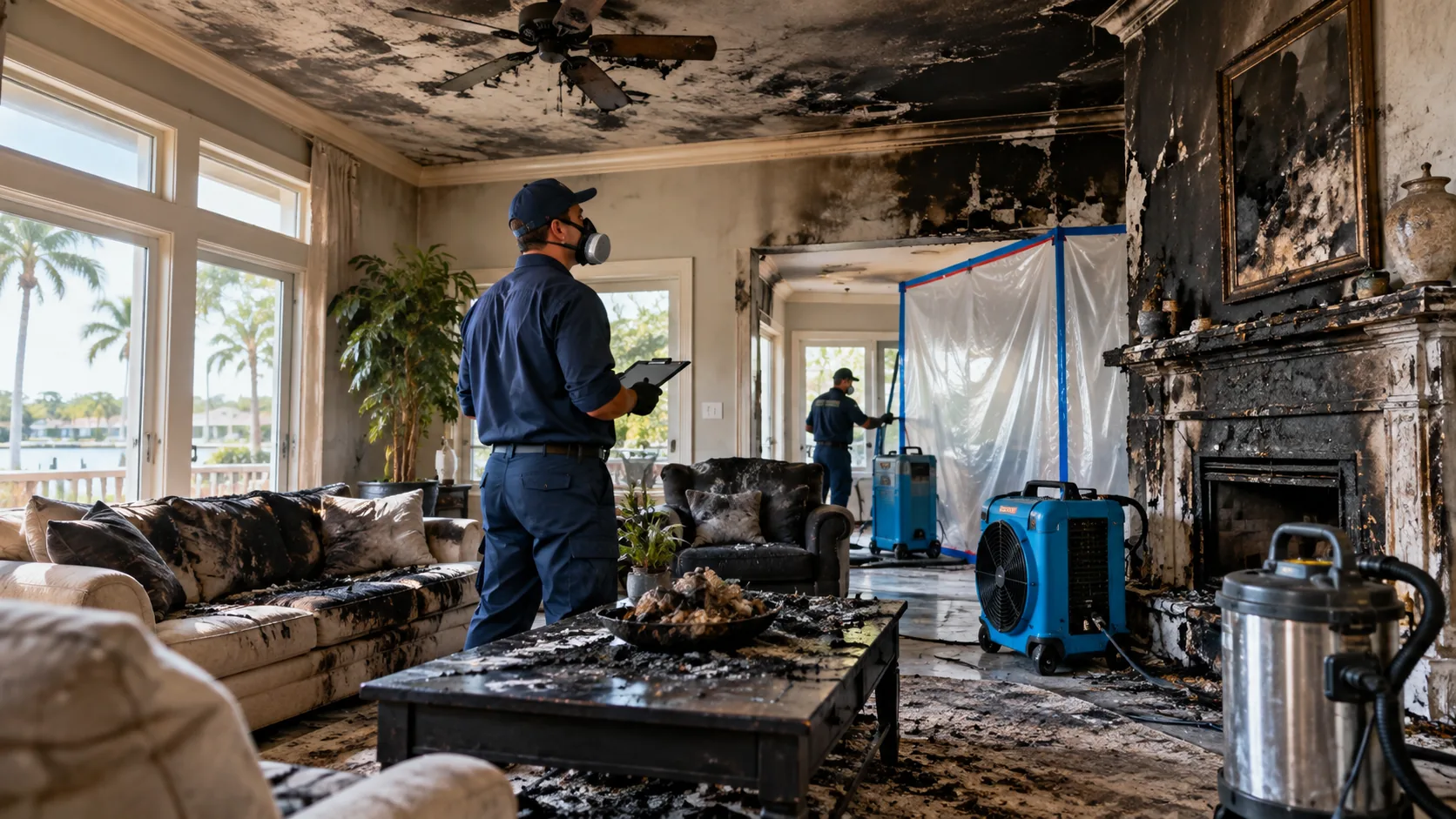
Smoke, soot, contents and post-fire water impacts organized into one recovery path.
Explore fire restoration →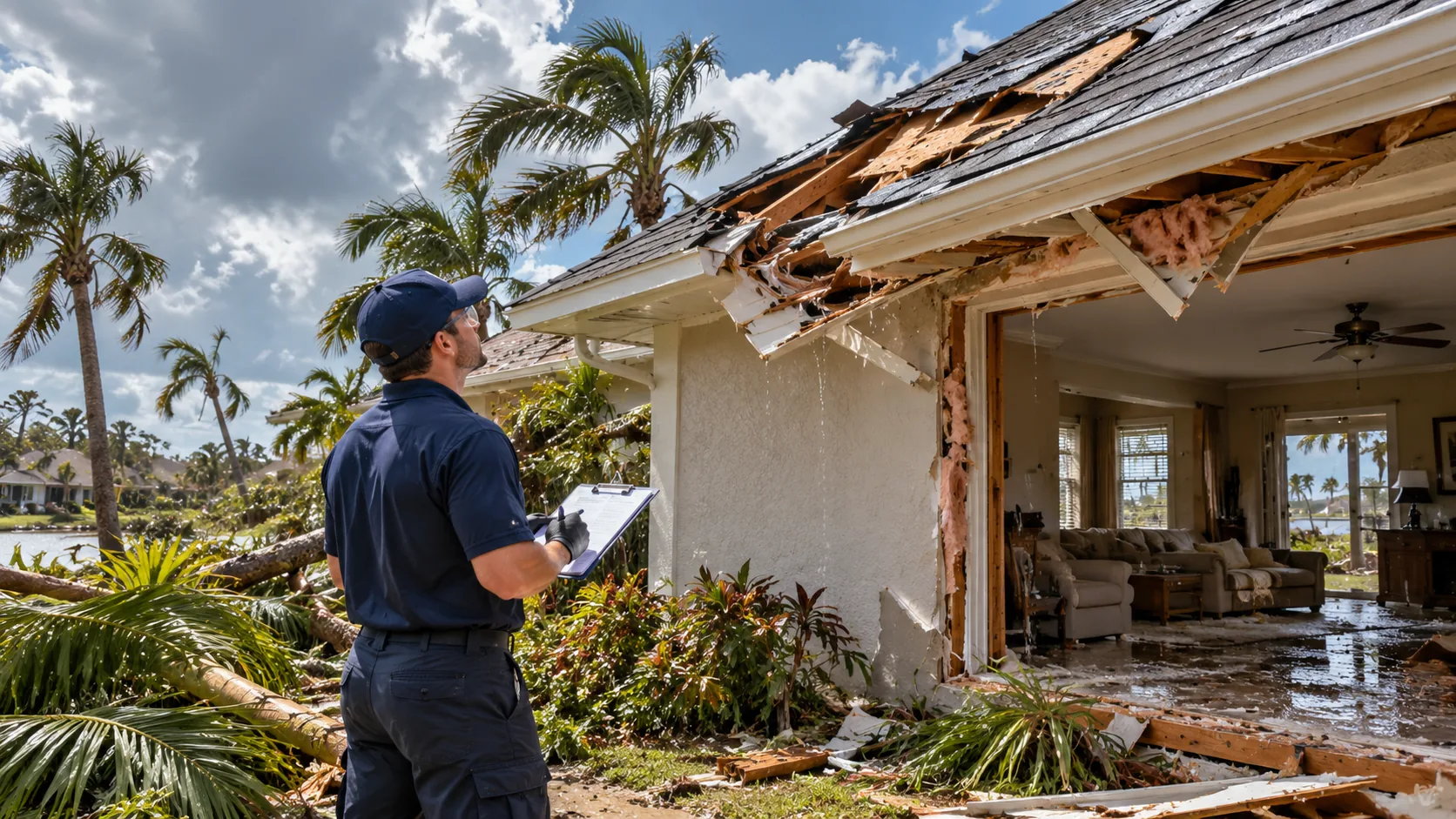
Storm-driven rain, roof openings, wind damage and temporary property protection.
Explore storm restoration →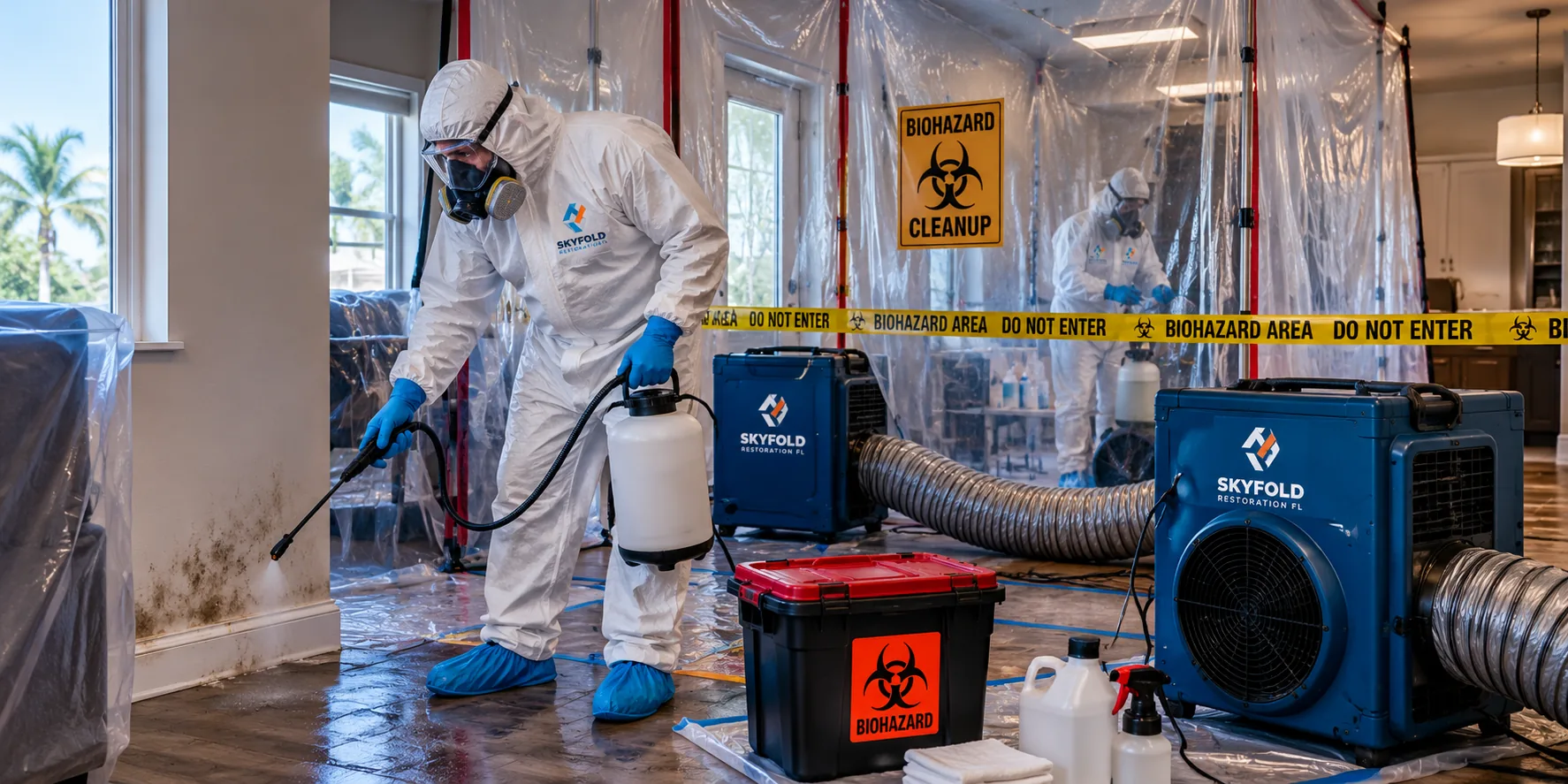
Controlled cleanup, containment, decontamination and sanitation for sensitive situations.
Explore biohazard cleanup →Water restoration is broader than removing the puddle you can see. Moisture can remain in flooring, walls, cabinets, ceilings, insulation and contents after surface water is gone.
The practical sequence usually starts with safety and source control, followed by extraction, moisture assessment, structural drying, cleaning and verification. The actual scope depends on the water source, materials, affected footprint, access and measured conditions.
Open Water Damage Restoration in FloridaDrying should be guided by the building and moisture conditions rather than surface appearance alone.
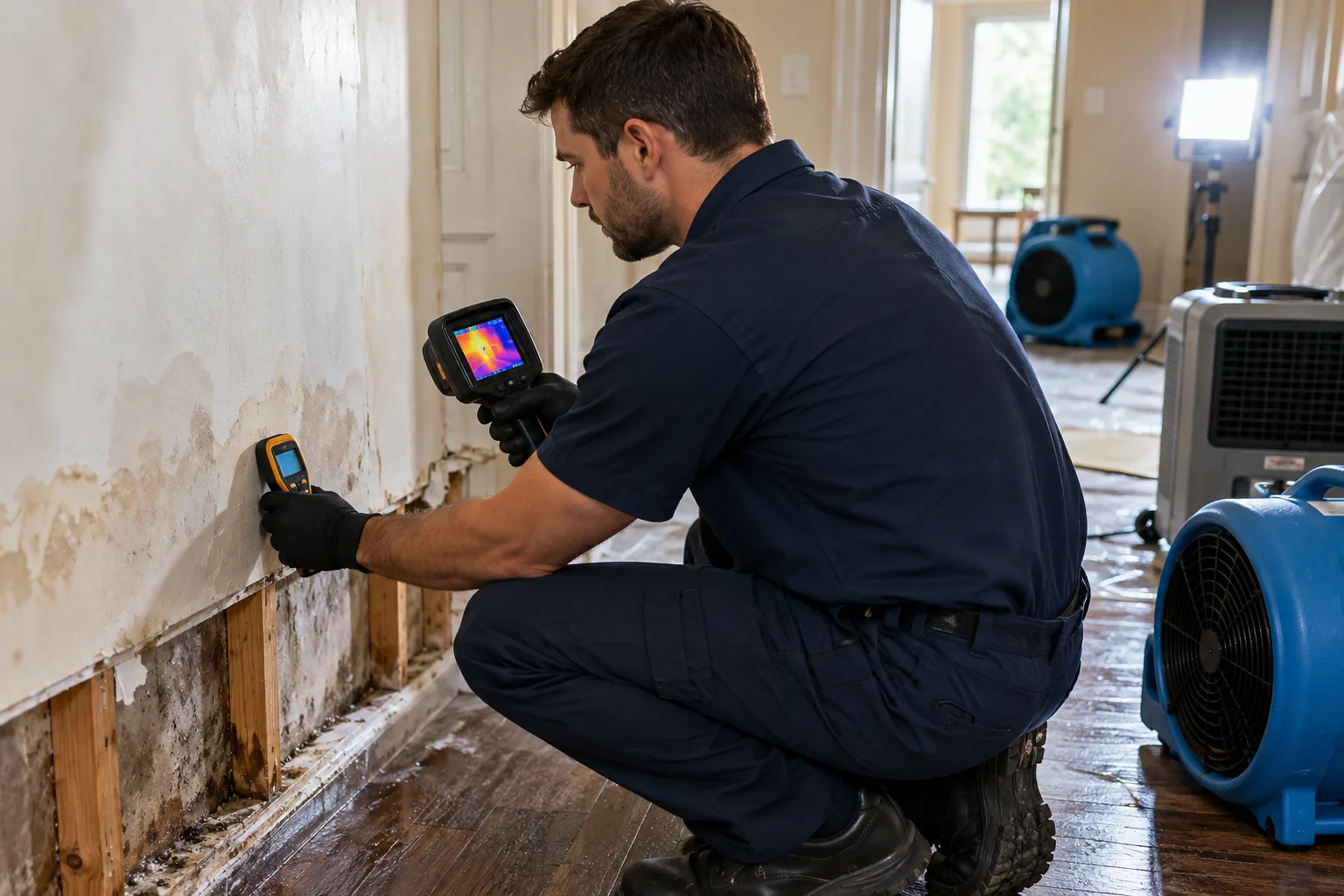
Inspection considers visible and concealed areas so the drying scope follows the actual water path.
Start at Florida, choose a region, open a city and then use the dedicated water-damage URL for that city.
The statewide water hub is the main navigation layer. Each region leads into its city pages, and each city has a dedicated water-damage service URL.
Miami, Fort Lauderdale, West Palm Beach and surrounding service-area communities.
Orlando, Kissimmee, Lakeland and central inland communities.
Tampa, Clearwater, St. Petersburg-area and nearby communities.
Fort Myers, Naples, Sarasota-area and southwest service corridors.
Panhandle and North Florida communities organized by city and water service.
Inland communities with lake, suburban, rural and commercial property types.
Overlapping west-coast navigation for related communities in the broader corridor.
Use the statewide hub for the full directory. These are direct examples of the city → water-damage URL structure.
Access, occupancy, shared walls, contents and business use can affect the practical order of restoration work.
Kitchens, bathrooms, floors, ceilings, closets and personal contents may all be part of one water-loss path.
Shared walls and building management can make access and adjacent-unit checks important.
Owner, guest, property-manager and contents coordination can add operational steps.
Occupied workspaces may need broader coordination around access, documentation and business use.
Start with safety, then protect useful information about the loss.
Different losses require different details, but these stages give property owners a practical framework.
Share the city, ZIP, source and immediate safety concerns.
Review the affected areas, materials, access and concealed conditions.
Control the source and protect the property from additional damage where possible.
Remove standing water or perform the appropriate cleanup for the damage type.
Use the controls and monitoring that fit the actual property conditions.
Document the condition and identify materials or areas requiring repair.
Good records help keep conversations with occupants, owners, insurers, adjusters and contractors easier to follow. Coverage decisions remain with the insurance carrier.
Photograph affected rooms, materials and contents before work changes the scene, when safe to do so.
Keep notes about discovery, source control, extraction, drying and other mitigation steps.
Retain estimates, invoices, equipment notes, receipts and related service records.
Water removal focuses on removing accessible water. Restoration may also involve moisture assessment, structural drying, cleaning, contents handling and repair planning.
Yes. Moisture can remain beneath flooring, inside wall assemblies, behind cabinets or in other materials that are not obvious from the surface.
Have the property address, city, ZIP code, damage type, apparent source, whether water is still active and any immediate safety concerns you can report safely.
No. The location directory is a service-area navigation structure. A city or ZIP listing should not be interpreted as a separate physical office unless an office is explicitly stated.
Timing depends on the water source, affected materials, access, moisture conditions, contamination concerns and the work required after mitigation. A property-specific assessment is more useful than a fixed promise.
Give the city, ZIP and damage type so the relevant restoration path can be reviewed.
These links provide public information and are separate from Skyfold Restoration.
Florida emergency preparedness and hazard-planning guidance.
Federal guidance for floods, hurricanes and other hazards.
Federal disaster preparedness and recovery information.
Public insurance consumer resources for Florida residents.