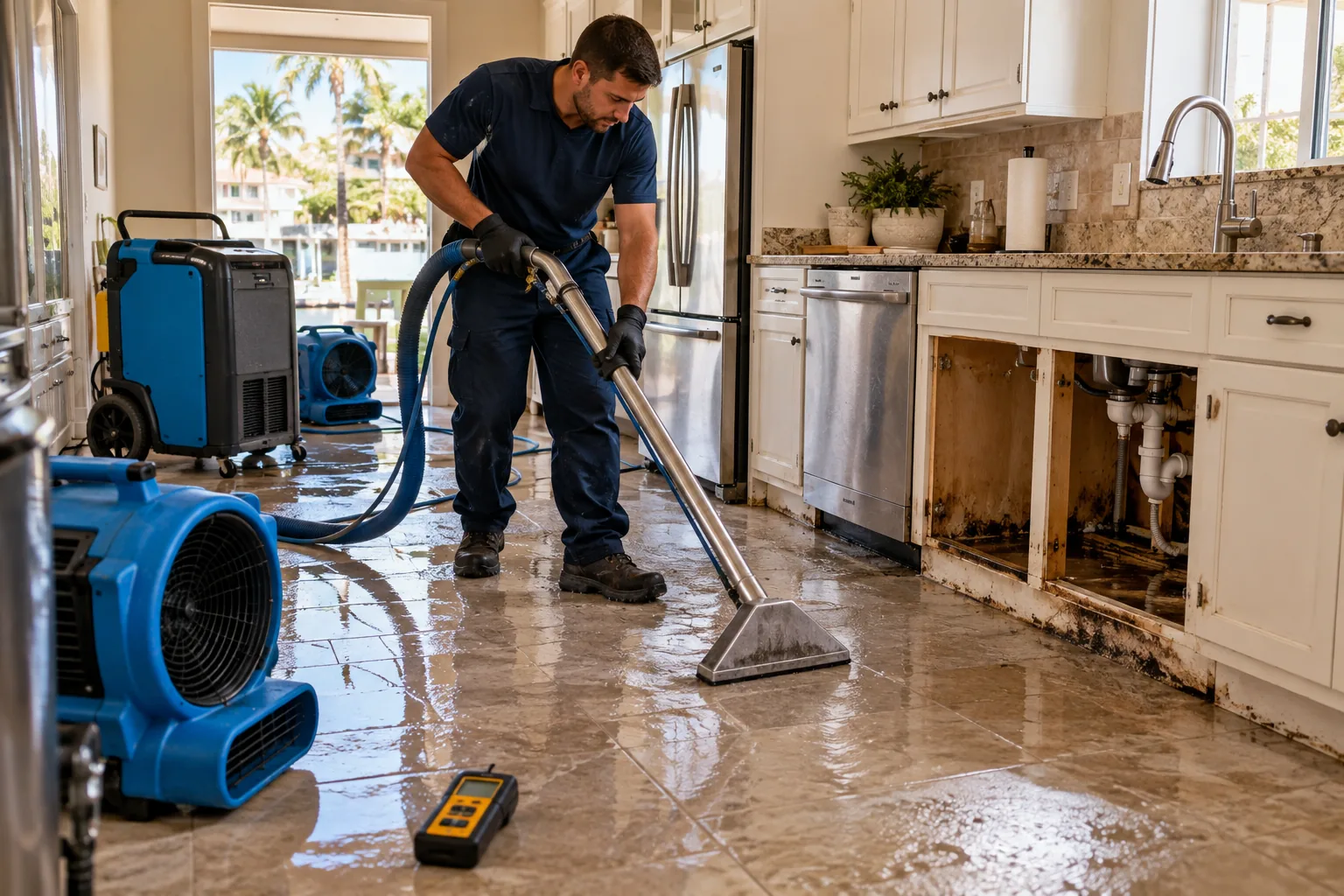
Extraction is not the whole job
Standing water may be removed while moisture remains in floors, walls, cabinets or insulation.
When st. Johns River basin flooding spreads across low neighborhoods during heavy rain seasons, and 1970s-era homes with original roofs leak in tropical winds. Orange City property owners need water damage restoration planned around those exact conditions. This page covers water damage restoration across Volusia County — from Blue Spring State Park and Historic Downtown Orange City to nearby neighborhoods (32763, 32713). The local pathway includes response, water extraction, moisture mapping with meters and thermal imaging, and structural drying, and claim-ready documentation from the first visit.
Coverage entries describe the service-area directory and do not represent a physical office at every listed ZIP.
The city/service child page is intentionally more specific than the parent city hub.
If accessible and safe, stop or isolate the water source. Keep clear of electrical and structural hazards.
Photograph affected rooms, materials and contents before cleanup changes the condition.
Identify the apparent source, affected areas and whether moisture may have moved into concealed spaces.
Match equipment and sequence to the amount of water, affected materials, access and measured conditions.
Repeat measurements rather than deciding a structure is dry based only on surface appearance.
Clean affected surfaces and plan repairs or reconstruction for materials that cannot be restored in place.
Water-loss planning in Orange City should be based on the source, affected materials, access and measured moisture conditions. Florida humidity can slow drying, while heavy rainfall or building openings can introduce additional moisture. The service path should therefore be confirmed for the exact property rather than assumed from the city name alone.
Orange City properties can experience water intrusion from everyday leaks as well as heavy-rain or storm-related events. The property type also changes the scope: a single-family home, apartment, hotel, condo or office can have very different moisture pathways and access requirements.
In Florida, humidity can remain a factor during drying. That makes moisture measurement, environmental monitoring and a documented drying plan more useful than simply waiting for visible surfaces to feel dry.
Standing water may be removed while moisture remains in floors, walls, cabinets or insulation.
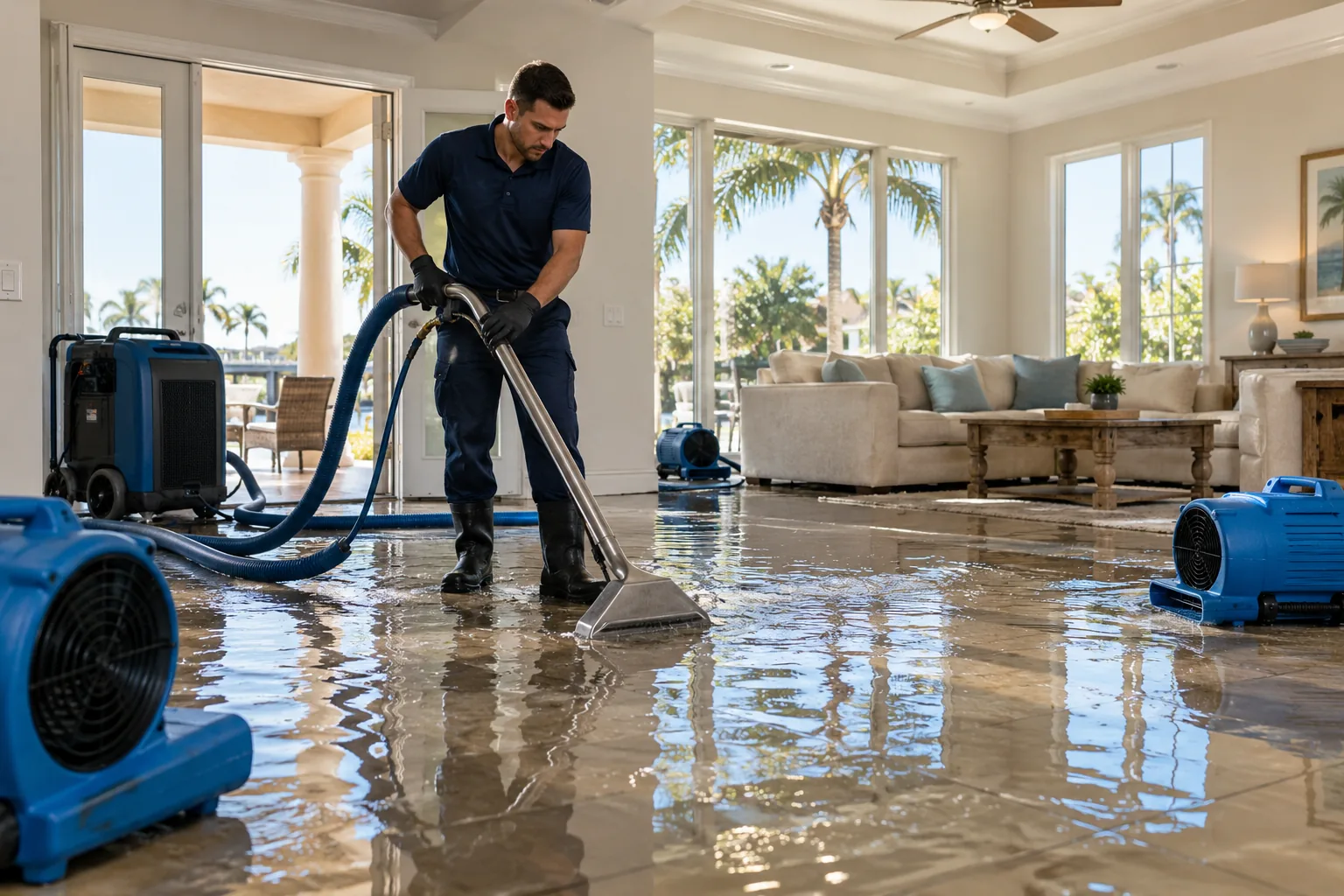
Readings can help identify areas that look dry but remain wet below the surface.
Sudden pipe failures can move water into floors, walls and contents quickly.
Burst pipe help →Toilets, sinks, refrigerators, dishwashers and other connections can leak inside cabinets or walls.
Water restoration →A failed tank or connection can release a large volume of water into finished areas.
Water heater leaks →Condensate lines and drain pans can create recurring moisture around air-conditioning systems.
AC leak damage →Rain can enter through roof or exterior openings and then move into ceilings, walls and flooring.
Roof leak water damage →Contaminated water requires different safety and cleanup controls from a clean plumbing leak.
Sewage cleanup →These pages cover narrower service intent without replacing the main city/service child page.
Standing-water removal and initial stabilization.
View service →Measured drying for affected building materials.
View service →Controlled response for contaminated water losses.
View service →Assessment, extraction and drying after flooding.
View service →Identify hidden moisture and guide drying decisions.
View service →Plan repairs for materials that cannot be restored in place.
View service →Water-loss response changes with occupancy and building design. Shared-wall properties may need communication with managers or neighboring units. Vacation rentals may add owner/guest coordination. Commercial properties may need a documented access plan.
Kitchen, bathroom, laundry, roof and HVAC-related water losses.
Shared walls, stacked units and access coordination.
Owner, manager and contents coordination when occupants change.
Offices, lodging and other occupied buildings with broader logistics.
The supplied ZIP list is retained here as a directory aid.
Document affected rooms, materials and visible contents before conditions change when it is safe to do so.
Note what caused the loss, when it was discovered and whether the source is still active.
Keep estimates, invoices, service notes and moisture records provided during the project.
Insurance coverage depends on the specific policy and loss circumstances. Follow the instructions from your insurer or adjuster and do not assume a particular claim outcome.
Promptly when water is still spreading, standing water is present, contamination is suspected or building materials are affected. Safety comes first.
Remaining moisture is assessed and drying may continue with controlled airflow, dehumidification and repeated monitoring before cleaning or repairs.
Yes. Concealed areas can stay wet after the surface looks dry, especially in assemblies that absorb or trap moisture.
Sewage cleanup is a separate contaminated-water pathway. Keep people and pets away from affected areas until they have been assessed.
No. This is a service-area page within the Florida site structure. It does not by itself represent a physical local office.
Yes. The statewide water-damage page links the region directories and the 255 primary city/service pages.
In the Orange City area, water damage restoration typically falls within Florida ranges of $1,300–$5,600. Local factors — st. Johns River basin flooding spreads across low neighborhoods during heavy rain seasons, and 1970s-era homes with original roofs leak in tropical winds. — can move a project up or down within that range. An on-site assessment with moisture readings gives the only accurate number.
St. Johns River basin flooding spreads across low neighborhoods during heavy rain seasons, and 1970s-era homes with original roofs leak in tropical winds. Scopes here are built around that pattern: water extraction, moisture mapping with meters and thermal imaging, and structural drying, verified with meters rather than surface appearance.
Yes — this service-area page covers Orange City across 32763, 32713 in Volusia County, including Blue Spring State Park and surrounding communities. For active damage, call (833) 606-6010 any time.
Give the property address, ZIP and source details so the service path can be reviewed.