
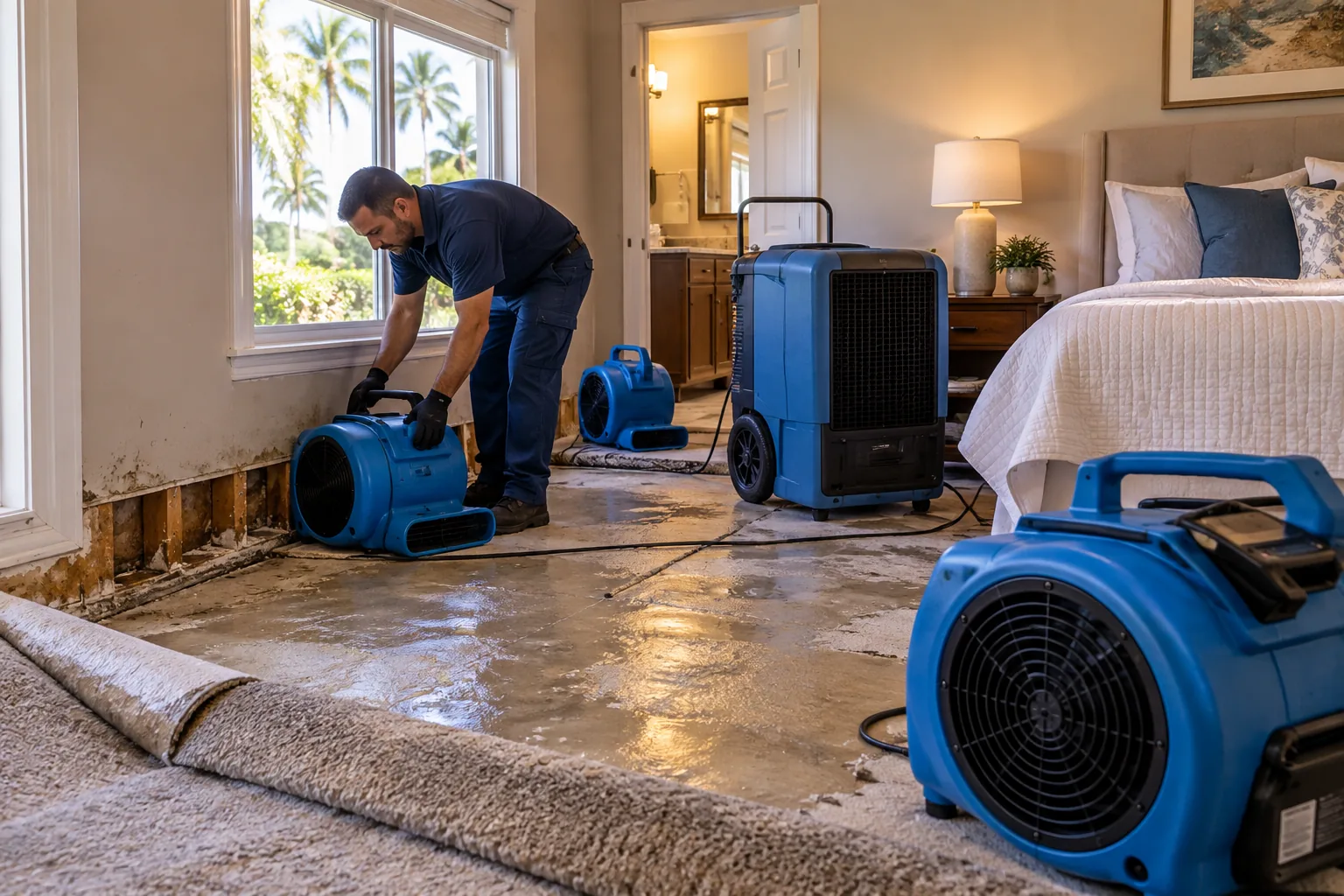
Inspect before assuming
Moisture, smoke residue or storm intrusion may reach concealed or adjacent areas.
Properties in and around Lakeshore may include lake-area homes, seasonal properties and buildings with different drainage or access characteristics. After a leak or storm event, the visible wet area may not match the full moisture path, so inspection, extraction and drying should be planned around where water traveled.
Properties in and around Lakeshore may include lake-area homes, seasonal properties and buildings with different drainage or access characteristics. After a leak or storm event, the visible wet area may not match the full moisture path, so inspection, extraction and drying should be planned around where water traveled.
For water losses, the visible stain or puddle may only show where water surfaced, not where moisture traveled. For fire or storm losses, the first damaged room may also have smoke, soot, roof-opening or firefighting-water impacts that need to be documented together.
That is why this page works as the broad city hub while the child page below focuses specifically on water damage restoration.
Moisture, smoke residue or storm intrusion may reach concealed or adjacent areas.
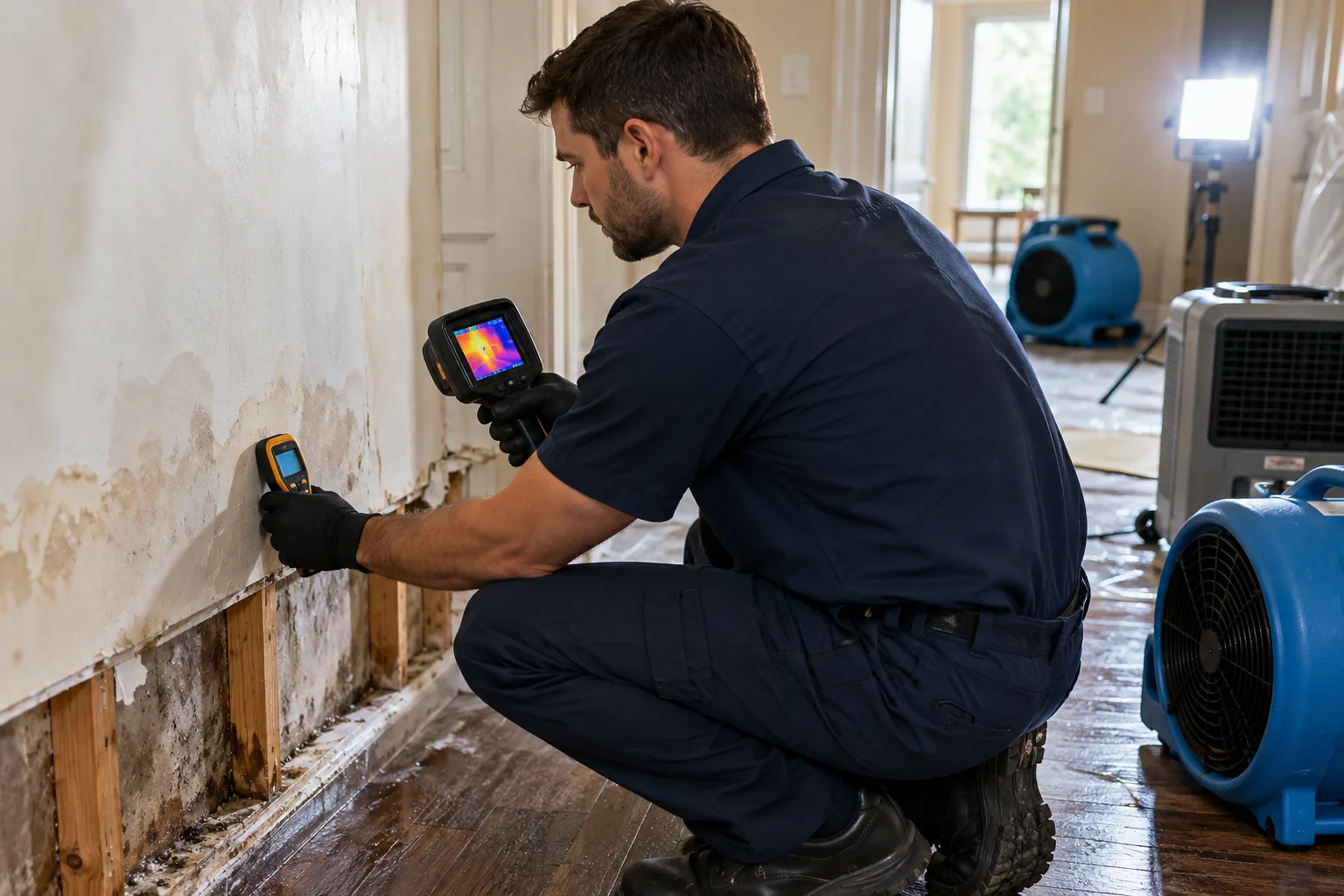
Access, occupancy, materials and contents affect the practical sequence of work.
Choose the path that matches the actual property-loss condition.
Water damage restoration, water extraction, structural drying, cleanup and moisture assessment.
Explore service →Fire, smoke and soot cleanup, contents coordination and restoration planning.
Explore service →Storm water intrusion, temporary protection and cleanup after severe weather.
Explore service →Moisture-related mold remediation and property cleaning planning.
Explore service →Controlled biohazard cleanup, decontamination and sanitation.
Explore service →Standing-water extraction and initial stabilization when appropriate.
Explore service →Structural drying and moisture monitoring for affected building materials.
Explore service →Temporary protection for storm, impact and fire-related openings.
Explore service →The dedicated child page narrows the intent to water extraction, drying, hidden moisture, local ZIP coverage and water-loss FAQs.
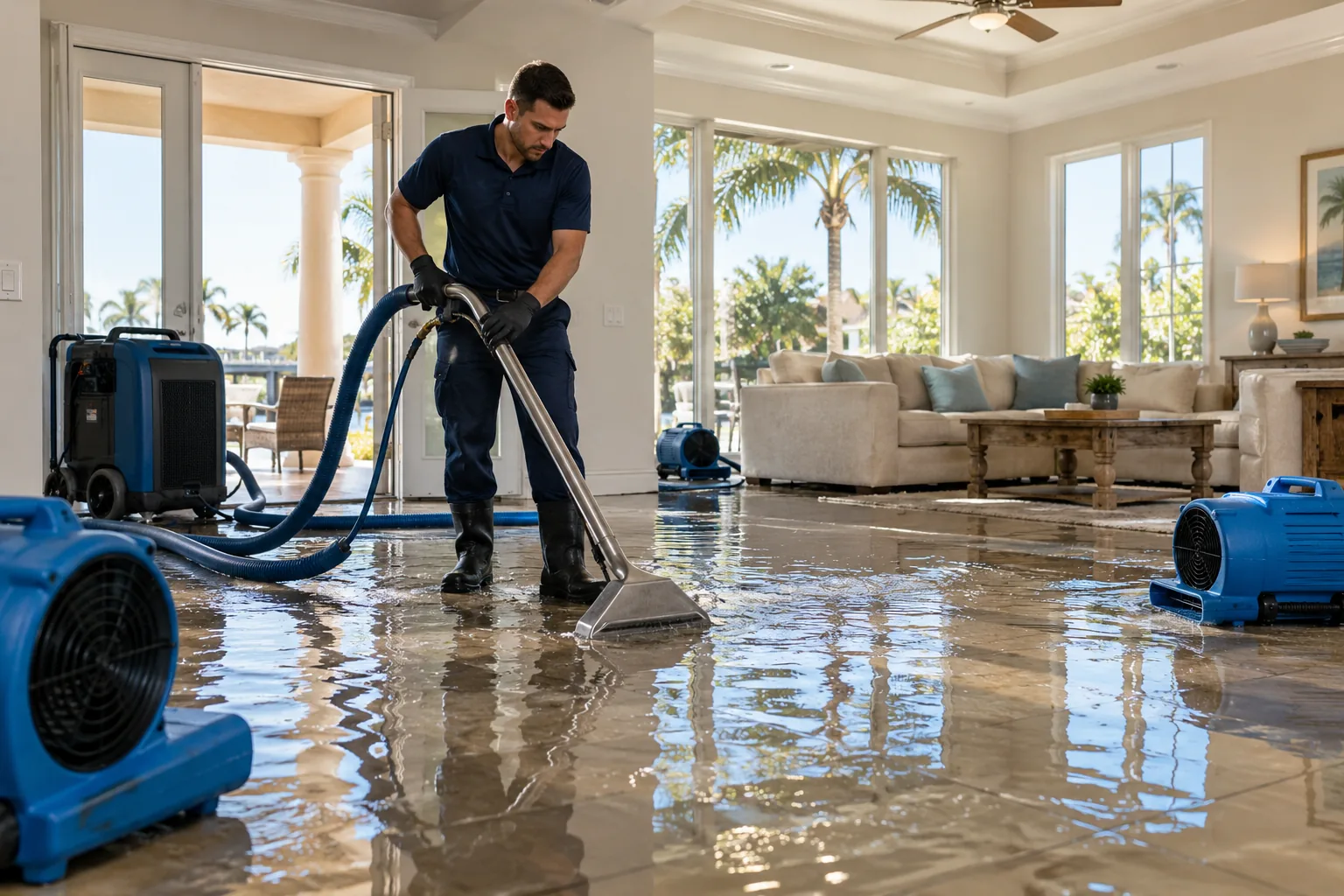
Use the exact child URL /locations/lakeshore/water-damage-restoration/ for water-loss intent.
Water Damage Restoration in Lakeshore →Water may keep spreading through flooring, walls, cabinets or contents until the source is controlled and extraction begins.
Discoloration, bubbling or soft materials can point to a leak above or behind the visible finish.
Rain can enter through roof, window, door or exterior openings and then move into interior materials.
Supply lines, fixtures, drain connections and appliances can release water quickly inside occupied spaces.
A damp smell after a leak can justify checking concealed spaces for moisture that remains after the surface dries.
Contaminated water needs a different safety and cleanup approach from a routine clean-water leak.
Start with safety and source control, then preserve a clear record of the condition.
Keep people away from electrical hazards, unstable areas and contaminated water.
Use accessible shutoffs only when doing so does not create additional risk.
Photograph rooms, materials and contents from a safe position.
Choose water, fire, storm or biohazard routing based on the actual loss.
These ZIP codes are carried forward from the supplied water-damage page data. They are service-area identifiers, not separate office addresses.
Availability should be confirmed for the exact property. Weather, access, current demand and the condition of the loss can affect scheduling and scope.
These links keep related city/service pages connected without creating a single generic city list.
No. A service-area listing does not promise an arrival time. Current availability depends on the property, access, conditions and capacity.
Have the property address, ZIP code, damage type, apparent source, whether water is still active and any immediate safety concerns you can report safely.
This page is a service-area page. A city listing should not be interpreted as a physical office unless a separate verified office is explicitly stated.
Yes. Water can remain behind walls, under flooring, around cabinets and inside other building assemblies. Moisture assessment helps identify conditions that are not obvious from the surface.
The service structure includes residential, multifamily, vacation-rental and commercial property pathways. Access and coordination requirements can differ by building.
Remaining moisture is assessed and drying may continue with controlled airflow, dehumidification and monitoring before cleaning or repair decisions are finalized.
Start with the city, ZIP and damage type. For water loss, use the dedicated child page below.